
.png)
Auto transport brokers act as intermediaries between shippers and carriers, handling the coordination, logistics, and due diligence required to move a vehicle.
While this may be worthwhile when working with a top-tier auto transport broker, it’s important to note that not all brokers deliver the same level of white-glove service. In other words, you don’t always get what you pay for.
When it comes to shipping vehicles, brokers are one way to get the job done, but they aren’t the only way. This article breaks down what brokers do, how they price shipments, and alternative methods for shipping vehicles.
What Is An Auto Transport Broker?
An auto transport broker acts as an intermediary between the shipper and the carrier. Shippers work with brokers to arrange vehicle transportation. After providing a quote and timeline, the broker works behind the scenes to secure a carrier that meets the shipment’s requirements.
In most brokered shipments, the broker manages communication and coordination, though in some cases carriers and shippers may interact directly once a shipment is assigned.
A broker’s responsibilities typically include:
- Coordinating shipment logistics, including posting loads, vetting carriers, scheduling pickup and delivery, and managing paperwork
- Providing quotes to shippers and negotiating rates with carriers
- Acting as a point of contact when issues arise, such as delays, changes, or damage claims
It’s important to note that working with a broker comes with both benefits and trade-offs. Let’s take a look at how they compare with other vehicle transport options like load boards or digital marketplaces.
Brokers Vs. Load Boards:
Load boards are online forums where vehicle shipments are posted with pickup and delivery dates, vehicle details, and target rates. They offer a direct way for shippers and carriers to connect without an intermediary.
One of the main benefits of using a load board is increased visibility. Shippers can see which carriers are bidding on their shipments and better understand who’s moving their vehicle and how pricing is structured. In theory, load boards give shippers more control over the process compared to working with a broker. In reality, load boards are often overrun with brokers, making operations less transparent than they might seem.
It’s also worth noting that when using a load board, shippers are responsible for carrier vetting, communication, scheduling, and issue resolution. Load boards facilitate connections, while brokers manage the shipment end-to-end and assume responsibility for coordination and problem-solving.
Want to learn more about load boards and how to use them? Read our Complete Guide to Auto Hauler Load Boards.
Brokers Vs. Direct Carrier Access
Direct carrier access means a shipper works directly with a carrier to arrange vehicle transport. In this model, the shipper assumes all broker responsibilities, such as:
- Vetting carriers
- Requesting insurance
- Keeping up with delays
- Paying the carrier
While similar to using a load board, this option eliminates broker fees and provides significantly more transparency, it also places more responsibility on the shipper. Plus, working directly with a carrier usually means you don’t have visibility into all the available transportation options.
Brokers Vs. Marketplaces
Auto shipping marketplaces like Auto Hauler Exchange vet and monitor carriers, handle compliance requirements, and support service issues, creating a more efficient experience while keeping shippers directly connected to the carrier.
The direct connection gives shippers clear visibility into cost, speed, and who’s transporting their vehicles. With Auto Hauler Exchange, you can see exactly how much is paid to the carrier versus the platform fee, communicate directly with carriers, and understand delivery timelines upfront (vehicles are delivered in under four days on average.)
Shippers who primarily use AHX to ship their vehicles report the highest levels of satisfaction with vehicle logistics, according to The State of Transparency in Vehicle Transportation.
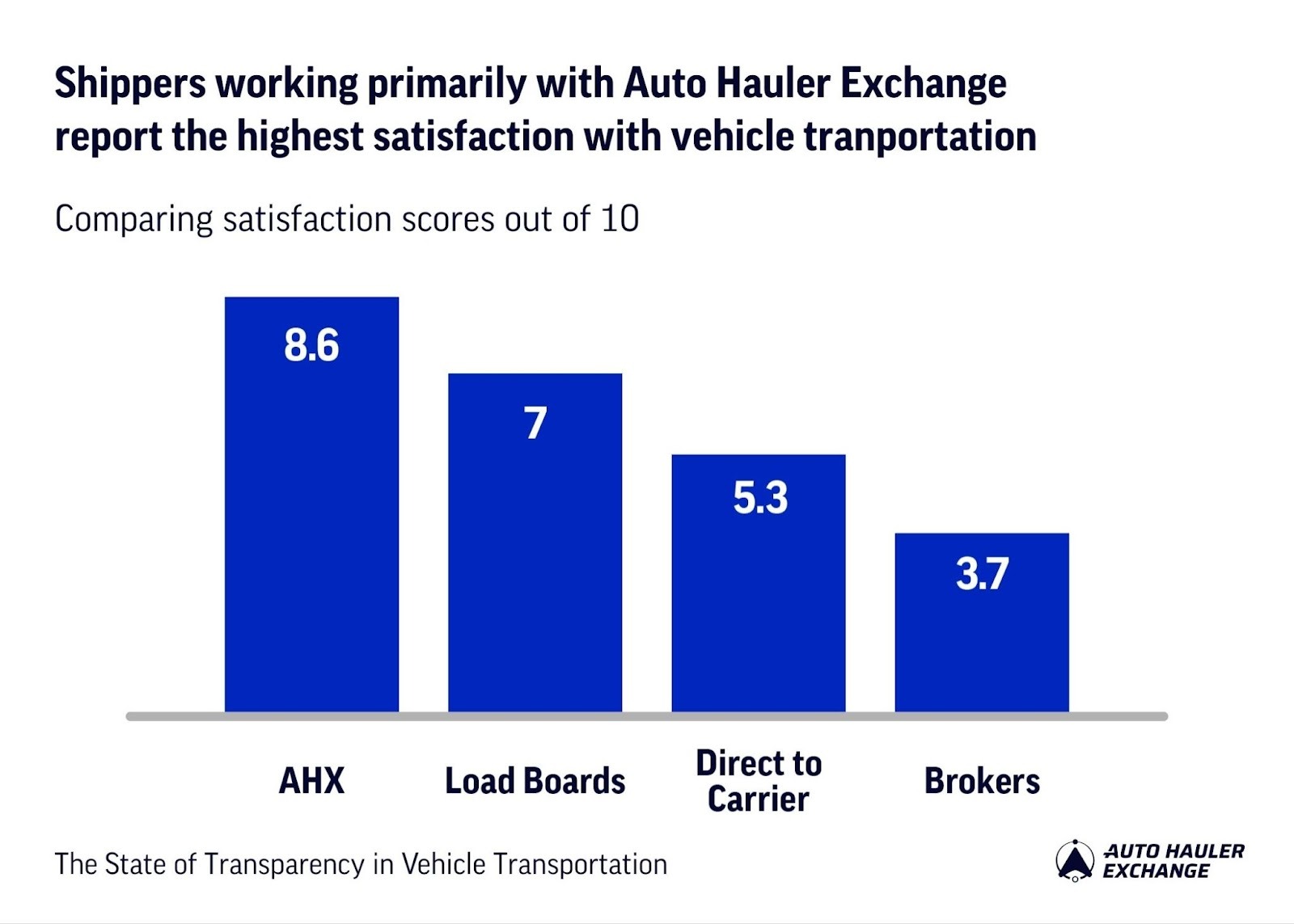
There are pros and cons to every approach. For a more detailed breakdown of each approach, read Marketplace vs Broker vs Load Board: What Dealers & Carriers Should Know.
What Does An Auto Transport Broker Do?
Below is a step-by-step look at the role brokers play behind the scenes of a vehicle shipment.
Finding carriers to move shipments
One of the primary responsibilities of an auto transport broker is sourcing and securing a carrier to move a shipper’s vehicle. Brokers often identify carriers through load boards, but many also rely on established networks of carriers they’ve worked with previously. In some cases, paying a broker provides access to these existing relationships.
Securing a carrier involves more than aligning price, route, and availability. Carrier selection is a critical part of the auto shipping process, and reputable brokers conduct due diligence to reduce risk. This may include confirming that the carrier:
- Operates well-maintained, appropriate equipment
- Holds valid operating authority and required interstate hauling permits
- Carries adequate cargo insurance—often in the range of $100,000 to $250,000 or more—and maintains an acceptable safety record
- Is properly authorized for the type of vehicle being transported
Pricing Loads and Negotiating With Carriers
While carrier rates are commonly calculated on a cost-per-mile basis, pricing a brokered shipment is rarely a one-step process.
In the spot market, brokers typically post loads to one or more load boards to gauge carrier interest, often starting with a lower rate and adjusting upward until a carrier accepts. Interested carriers respond with availability, pricing expectations, and any special requirements. The broker then finalizes the rate with the selected carrier and applies a margin to cover the cost of managing the shipment.
The shipper pays the broker, who in turn settles payment with the carrier.
Here’s the catch: In most brokered transactions, shippers don’t see how much of their total cost is paid to the carrier versus what’s retained by the broker. While brokers may secure lower carrier rates through negotiation, those savings aren’t typically passed on to the shipper.
Managing Carrier Communication
Brokers usually serve as the single point of contact for both shippers and carriers. They oversee all coordination, scheduling, and issue resolution throughout the shipment. This includes confirming pickup times, managing damage claims, addressing breakdowns, and adjusting plans if a carrier fails to show.
How Auto Transport Brokers Make Money
Auto shipping costs vary based on several factors, including distance, seasonality, and delivery destination. Generally, the average shipping cost is about $1.15 per mile, according to Forbes. On top of this base rate is the additional cost of using a broker.
For brokers to make money, they must either negotiate lower carrier rates to maximize their cut, move more volume, or ship more valuable vehicles. Auto transport brokers typically earn a 10–35% commission, depending on the outcome of negotiations.
While broker compensation structures are rarely disclosed in full, industry estimates suggest the following cost structure for brokered auto transport shipments:
- Carrier payment: Approximately 65–90%, covering driver wages, fuel, truck maintenance, insurance, operating costs, and tolls
- Broker payment: Approximately 10–35%, covering logistics coordination, dispatch, insurance, technology, and customer service
What do shippers see on their invoices?
Often, shippers only see a final, bundled price. Brokers typically price their services by adding a margin to the carrier’s rate.
For example, if a carrier’s cost is $1,000 for transport, the broker may charge the shipper $1,250 and keep $250 for their services. The shipper only sees the $1,250 invoice.
But it’s not always that clear-cut. In many cases, brokers quote shippers before securing a carrier to cover the shipment. From there, they push carrier rates as low as possible to widen their margins. If that margin doesn’t materialize, brokers go back to the shipper with a revised price. Meaning, the initial invoice price isn’t the final invoice price.
Some brokers choose to charge a flat fee instead of taking a commission, which offers more transparency for shippers, but is less common. In many cases, broker margins are unclear to shippers.
Is it Worth it to Use an Auto Transport Broker?
For decades, brokers have been the standard method for arranging vehicle transportation and are considered experts in auto hauling logistics. If you have a strong relationship with a broker you trust, it may make sense to maintain that partnership. Afterall, brokers handle the heavy lifting of coordinating with carriers and ensuring shipments arrive where they need to go, on time.
That said, brokers are not without their downsides.
Slow Delivery Times
Because brokers act as intermediaries between shippers and carriers, they introduce an additional layer of coordination into the shipping process. Communication that could otherwise happen directly is routed through a third party, increasing the amount of back-and-forth required to move a shipment forward. In practice, the process often looks like this:
- The shipper contacts the broker
- The broker searches for and contacts carriers
- Once a carrier confirms, the broker relays details back to the shipper
Each handoff adds time, and even small delays can compound.
Beyond logistics, incentives also play a role. Since brokers earn a margin on each shipment, there’s pressure to prioritize cheaper carriers. When service quality takes a back seat to price, the risk of delays increases. Lower-quality carriers may struggle with unreliable schedules, poor communication, or equipment issues, all of which can disrupt delivery timelines.
The impact shows up in the data. According to The State of Transparency in Vehicle Transportation, 18% of shippers working with brokers report that vehicles do not arrive within the expected timeframe—a failure rate 4.5X higher than for shippers using Auto Hauler Exchange and 2.5X higher than for those working directly with carriers.
Lack of Transparency
A key challenge with brokered shipments is limited transparency throughout the shipping process, from costs to arrival times.
There’s a lack of visibility into who’s moving your vehicle, how much they’re making, where the vehicle is, and when it will arrive at its destination. And this is no small issue.
In fact, shippers agree they want more transparency into expected arrival time (69%), location tracking (59%), and delays (47%).
Since the broker handles all of the logistics, shippers aren’t privy to information like the identity of the carrier, their reviews, reliability, etc. Essentially, they let the broker take the wheel.
More Expensive
Using a broker is typically more expensive than other vehicle logistics options for several reasons.
First, brokers build undisclosed markups into the price. You’re paying the broker not only to manage the shipment, but also to negotiate with the carrier—without transparency into how much of your spend actually goes to the trucking company.
Second, there are hidden costs—some that appear plainly on the final invoice and others that require closer inspection. One Reddit commenter shared:
“We are shipping two vehicles across the continent. The quote in the signed contract was $1,800. Right after pickup, I got an email saying the final cost would be $2,300.”
Brokers sometimes offer low initial quotes to win business, then layer on fuel surcharges, remote-area fees, or demand-driven price increases that raise the final cost.
And some of the most expensive impacts never appear on the invoice at all. They show up in increased floorplan interest, storage fees, and slower inventory turn caused by delayed deliveries.
How to Choose an Auto Transport Broker
Don’t choose a broker solely based on their quote. There are qualifications beyond costs that are just as important.
Before signing on the dotted line with a broker, ask the following questions to ensure you’re getting what you pay for.
1. Are you Bonded and Permitted?
Does the broker hold Federal Motor Carrier Safety Administration (FMCSA) licensing?
This is the industry standard for auto shipping brokers, confirming they’re legally authorized to operate in interstate commerce within the United States. It also indicates they meet federal safety and regulatory requirements and have agreed to comply with applicable regulations.
2. What technology do you use?
It’s not uncommon for auto shipping brokers to coordinate with carriers by phone, fax shipping contracts, or use pen and paper to complete vehicle condition reports. Some brokers do use technology to share quotes, perform load matching, or determine rates based on current market conditions. Others use transportation management systems to track shipments, anticipate delays, and identify route changes.
The reality is simple: every industry is moving toward more advanced, data-driven technology. Vehicle logistics is no exception. Shippers that fail to adapt risk longer dwell times, higher costs, and less control over their shipments. If you’re considering working with a broker, it’s critical to understand what technology they’re actually using and whether it’s helping your vehicles move faster.
3. How do you vet your carriers?
If a broker can’t clearly explain how carriers are screened, or if they rely solely on word-of-mouth referrals, you may want to look elsewhere. At a minimum, they should verify carrier insurance, review safety records, and confirm FMCSA licensing.
4. How much of my payment goes to the carrier versus your brokerage?
A broker should provide a transparent breakdown of fees and commissions that demonstrates fair compensation for all parties. As we discussed in Auto Shipping Cost: What You Need To Know To Get The Best Rates, some brokers charge a flat fee for their services, while others increase margins based on negotiation outcomes. Look for clear, honest disclosure of commissions that align with industry standards.
5. How quickly do you typically assign a carrier?
The only right answer to this question is as soon as possible. Timing can vary based on seasonality, route popularity, and special requirements such as enclosed transport or specialty vehicle specifications. If a carrier can’t give you a reasonable estimate, this may signal that they use an inconsistent carrier network.
Keep in mind: Vehicle transport marketplace Auto Hauler Exchange takes an average of one day to match a shipment with a carrier. Speed is of the essence when it comes to vehicle transport, so don’t sell yourself short on time.
6. How do you handle damages?
A reliable broker should guide shippers through every step of the damage resolution process and ensure safeguards are in place before the vehicle ships.
- Before shipment: Brokers should conduct a thorough pre-shipment inspection and document existing damage with detailed photos and videos. They should also confirm the carrier’s insurance coverage and limits to ensure the vehicle is adequately protected.
- After shipment (if damage occurs): Brokers should respond within 24 to 48 hours and manage all communication with the carrier while handling required paperwork, including the delivery receipt, bill of lading, and driver’s signature. They should collect detailed evidence of damage, compare it to pre-shipment documentation, file claims with the carrier’s insurer, oversee repair estimates, and keep the shipper informed throughout the process.
7. Do you provide real-time updates?
According to The State of Transparency in Vehicle Transportation, 91% of respondents say that real-time updates are important or very important when shipping their vehicles.
The best brokers use transportation management systems to track shipments, enabling them to provide real-time updates when shippers request them. But this is not the industry standard.
8. How quickly are vehicles delivered on average?
An experienced broker should be able to provide realistic average transit times for a given route and season, based on historical delivery data.
Auto Transport Without a Broker: Alternative Methods
Before modern logistics tools existed, brokers played a central role in auto shipping. They helped shippers find carriers, coordinated communication, and served as the main source of updates throughout a shipment. For carriers, brokers were often the primary way to access consistent demand.
Today, technology has changed the vehicle logistics landscape, allowing for more direct access between shippers and carriers. As a result, many shippers now have alternatives that offer greater visibility and control. Beyond traditional brokers, shippers today have two viable options:
1. Using a Load Board Instead of a Broker
Load boards have evolved from simple listing tools into more robust directories with more data available to shippers. While early load boards offered little more than origin, destination, and pickup windows, modern platforms now surface carrier credentials, insurance status, safety data, ratings, and indicative pricing.
That said, this information is often fragmented, self-reported, or difficult to verify in real time. While load boards increase visibility, they still place the burden of vetting, coordination, and risk management on the shipper, leaving many businesses to choose between transparency and operational simplicity.
2. Using a Marketplace Instead of a Broker
Marketplaces like Auto Hauler Exchange combine broker-level support with the transparency of a digital platform. Like a broker, they vet carriers, manage paperwork, and provide support when issues arise. Unlike brokers, marketplaces give shippers visibility into pricing, carrier identity, and delivery timelines. They achieve this by using technology to streamline coordination and reduce the inefficiencies built into the traditional broker model.
The Auto Hauler Exchange marketplace provides:
- Real-time updates: Shippers can log into Auto Hauler Exchange’s dashboard and track vehicle shipments in real time.
- Competitive pricing: Brokers traditionally had the strongest pulse on supply-and-demand swings and their impact on pricing. Today, Auto Hauler Exchange’s AI Pricing Engine adjusts rates based on market data and shipping trends, keeping loads attractive to carriers without inflating costs for shippers.
- A trusted carrier network: Auto Hauler Exchange democratizes access to more than 5,500 pre-vetted carriers, ensuring consistent supply, lowering costs through competition, and maintaining high service standards.
- Automated back-office tasks: Where brokers once managed mountains of paperwork, including W-9s, insurance forms, checks, invoices, and inspection reports, Auto Hauler Exchange captures and manages all documentation digitally, automatically storing and maintaining records.
- Clear, transparent pricing and logistics: Auto Hauler Exchange isn’t a broker, and that distinction changes how costs and service are delivered. By separating carrier pay from platform fees, AHX offers clear visibility into pricing. Despite removing the broker layer, shippers continue to receive white-glove service, with most shipments accepted within 24 hours, delivered within four days, and priced 15–20% lower per vehicle on average.
How Cable Dahmer Auto Group Saved Big Using Auto Shipping Technology Instead of a Broker
Don’t just take our word for it. The proof is in our customers’ experience. Cable Dahmer saved half a million in broker fees using the Auto Hauler Exchange marketplace. By choosing technology over brokers, the company:
- Cut average transit times from 14+ days to about 4 days
- Eliminated hidden broker markups
- Reduced freight spend by about 25 % per vehicle
- Eliminated arbitration window risks
- Saved over $500,000 in transport savings in the first year alone
The Future of Vehicle Logistics
While auto transport brokers have long been the go-to solution for shippers who want hands-off service and expert guidance, they aren’t the only option anymore.
Using marketplaces like Auto Hauler Exchange, shippers can enjoy all the benefits brokers provide, with added transparency, faster delivery, and cost savings.
Whether you stick with a trusted broker or explore technology-driven alternatives, the future of auto shipping is evolving. Knowing your options can help you get the best of all worlds.




.png)
