

For decades, vehicle logistics has operated as a largely opaque industry, where limited transparency is treated as the norm. But today, the consequences of that opacity are becoming impossible to ignore: volatile pricing, inconsistent delivery speeds, and an industry increasingly vulnerable to fraud.
At the same time, expectations are changing. As technology continues to raise the bar across all industries, it’s clear that shippers expect a higher degree of transparency, speed, and accountability.
This report analyzes data from 59 U.S.-based shippers to understand satisfaction with vehicle logistics and identify opportunities for improvement. It examines:
- Top pain points in vehicle transportation today
- The prevalence of fraud and the most common types to watch for
- Gaps in understanding total vehicle shipping costs
- Expectations around delivery times versus reality
- Satisfaction with transparency and which areas require greater visibility
The biggest pain point for vehicle shippers is finding reliable carriers
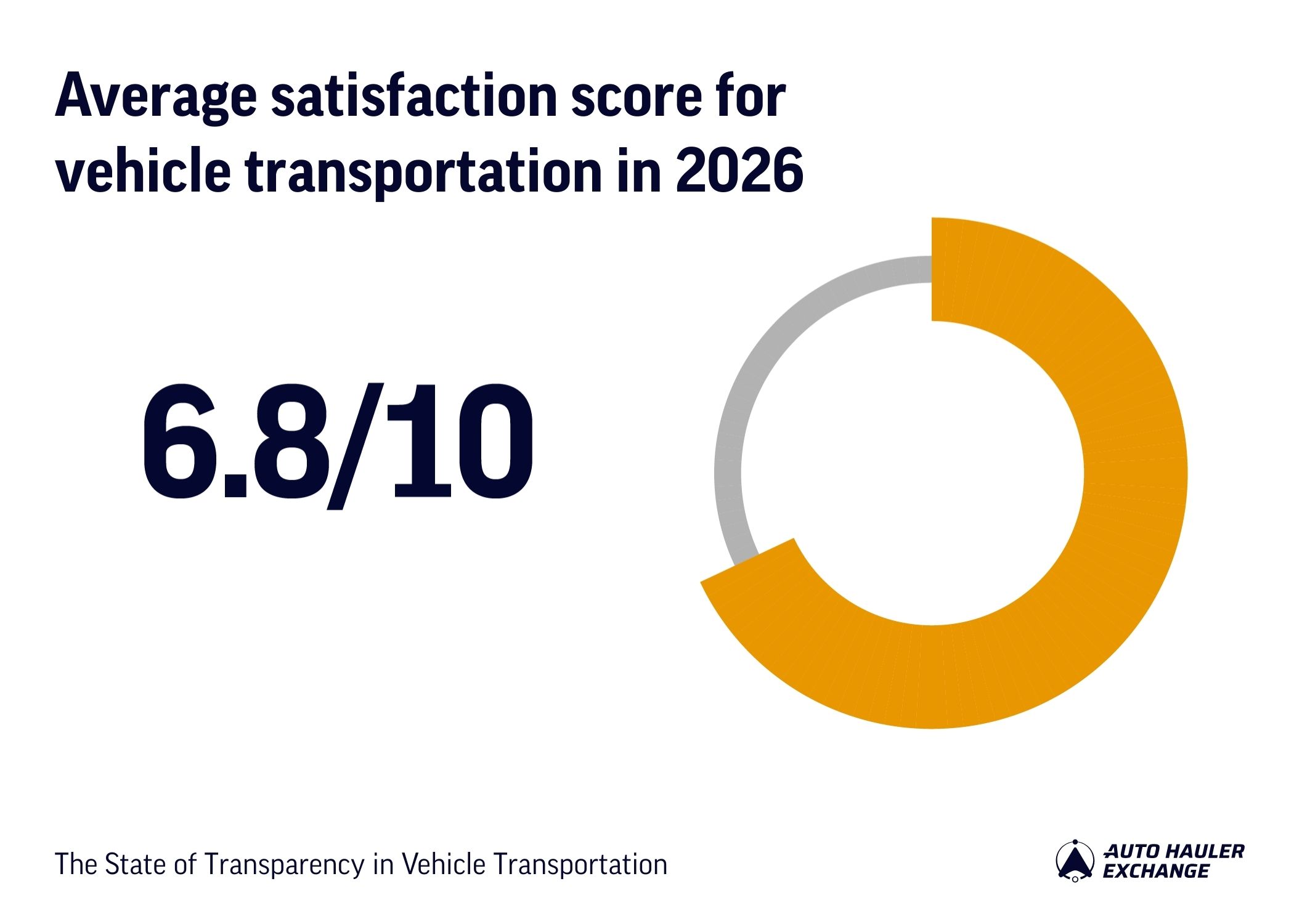
When asked to rate their satisfaction with vehicle logistics on a ten-point scale, respondents gave the industry an average score of 6.8. This rating suggests the industry is functioning, but not optimally.
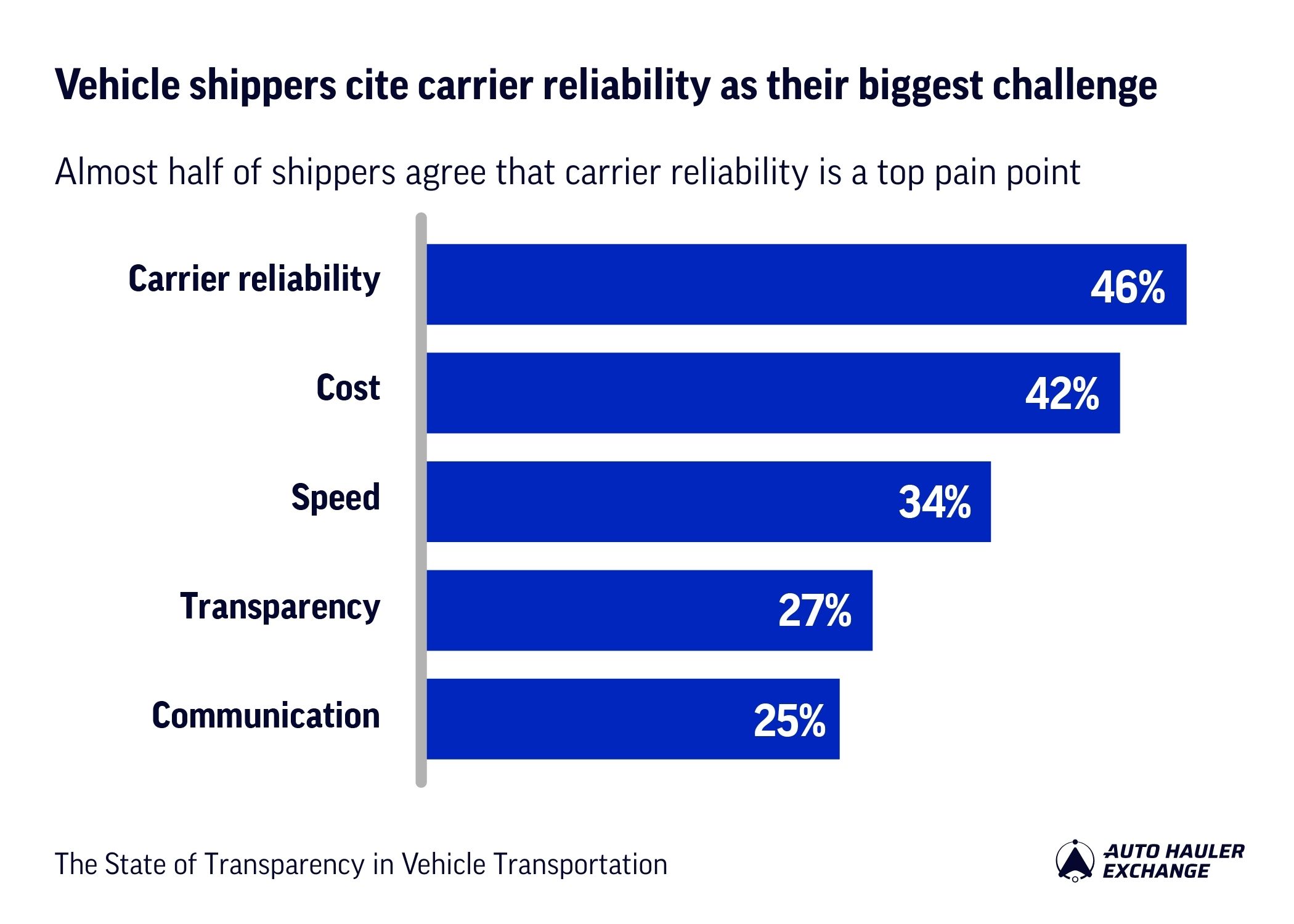
To dig deeper into what factors are contributing to a near-fail grade, shippers were asked about their top pain points in the vehicle logistics industry. Nearly half of respondents (46%) identify ‘finding a reliable carrier’ as their primary challenge, ranking it ahead of cost, speed, transparency, and communication.
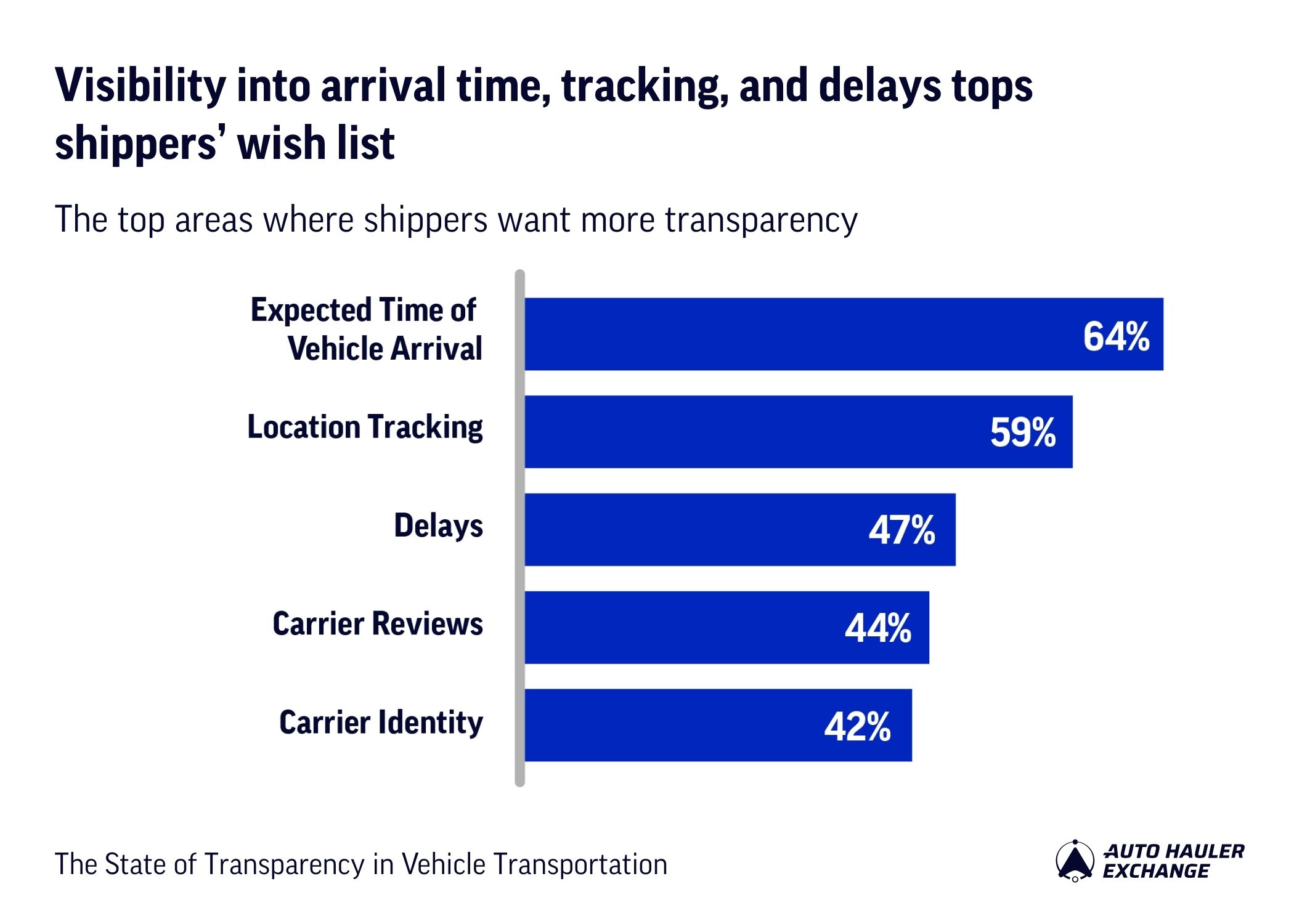
Given the importance of reliability, it’s not surprising that shippers want to know more about the carriers moving their vehicles: 42% of respondents indicate they want to know the identity of the carrier moving their vehicle, and 44% want the ability to read carrier reviews.
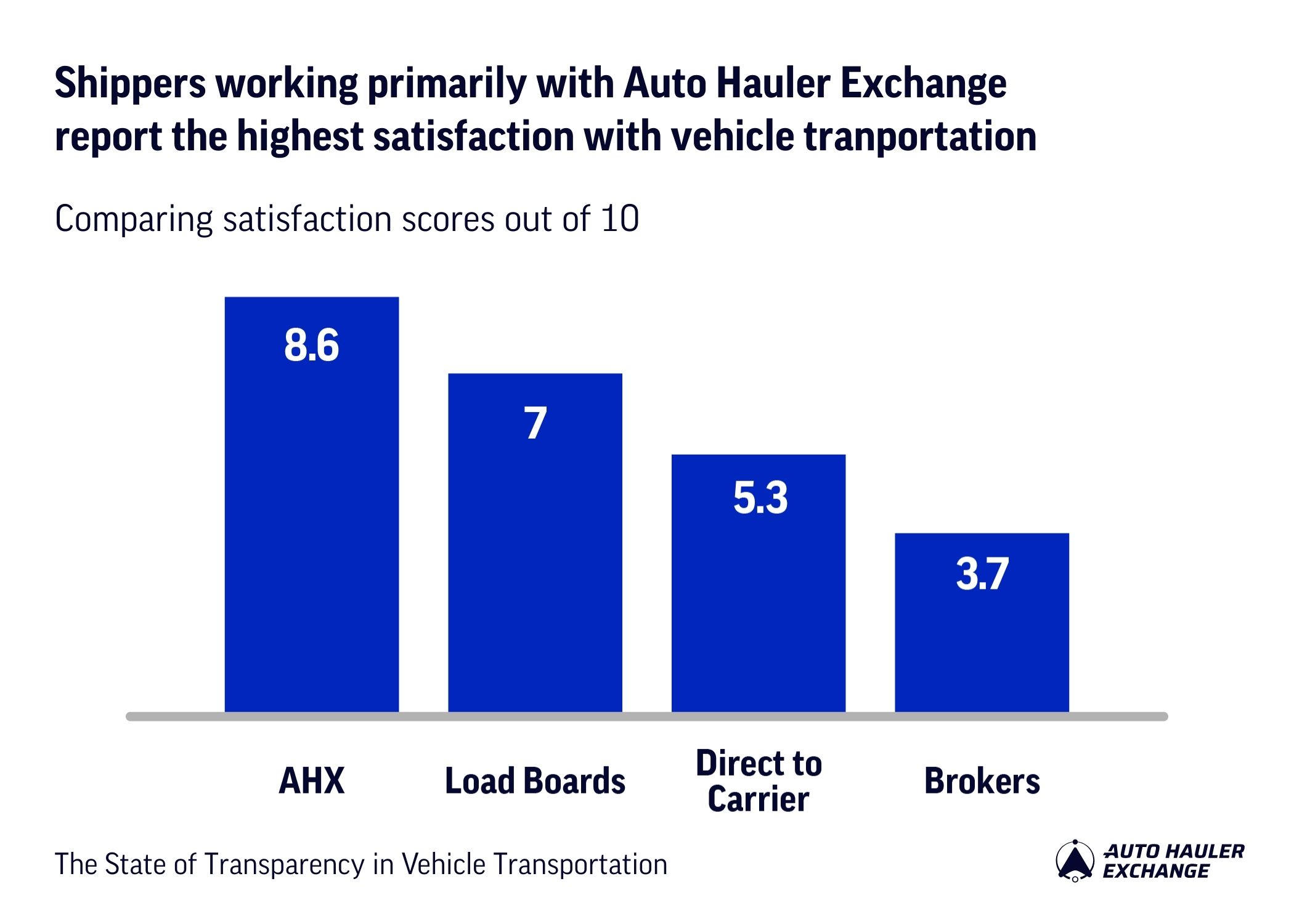
This push toward greater carrier visibility helps explain why a marketplace-based approach earned the highest satisfaction scores. Shippers whose primary mode of transporting vehicles is the Auto Hauler Exchange marketplace reported the highest overall satisfaction with vehicle transportation.
Key takeaway: Vehicle shipping methods impact reliability and, in turn, overall satisfaction
Carrier reliability is foundational to relieving other pain points in vehicle logistics. Reliable carriers make deliveries on time and communicate clearly.
Yet, reliable auto transport has historically been difficult to secure. Auto hauler load boards are largely unmonitored and include a wide range of carriers, from reputable operators to bad actors. And brokers have traditionally restricted access to their carrier networks, forcing shippers to blindly send vehicles off without knowledge of who’s behind the wheel.
The demand for more visibility into the identity of carriers and verified peer reviews indicates that shippers want insight into who’s transporting their vehicle from A to B. More transparency creates stronger accountability when problems occur.
Nearly one in three shippers experienced vehicle transportation fraud
A search for “freight fraud” surfaces countless cautionary tales. The survey data confirms that stories of fraud in vehicle logistics are not isolated incidents. They’re becoming increasingly prevalent.
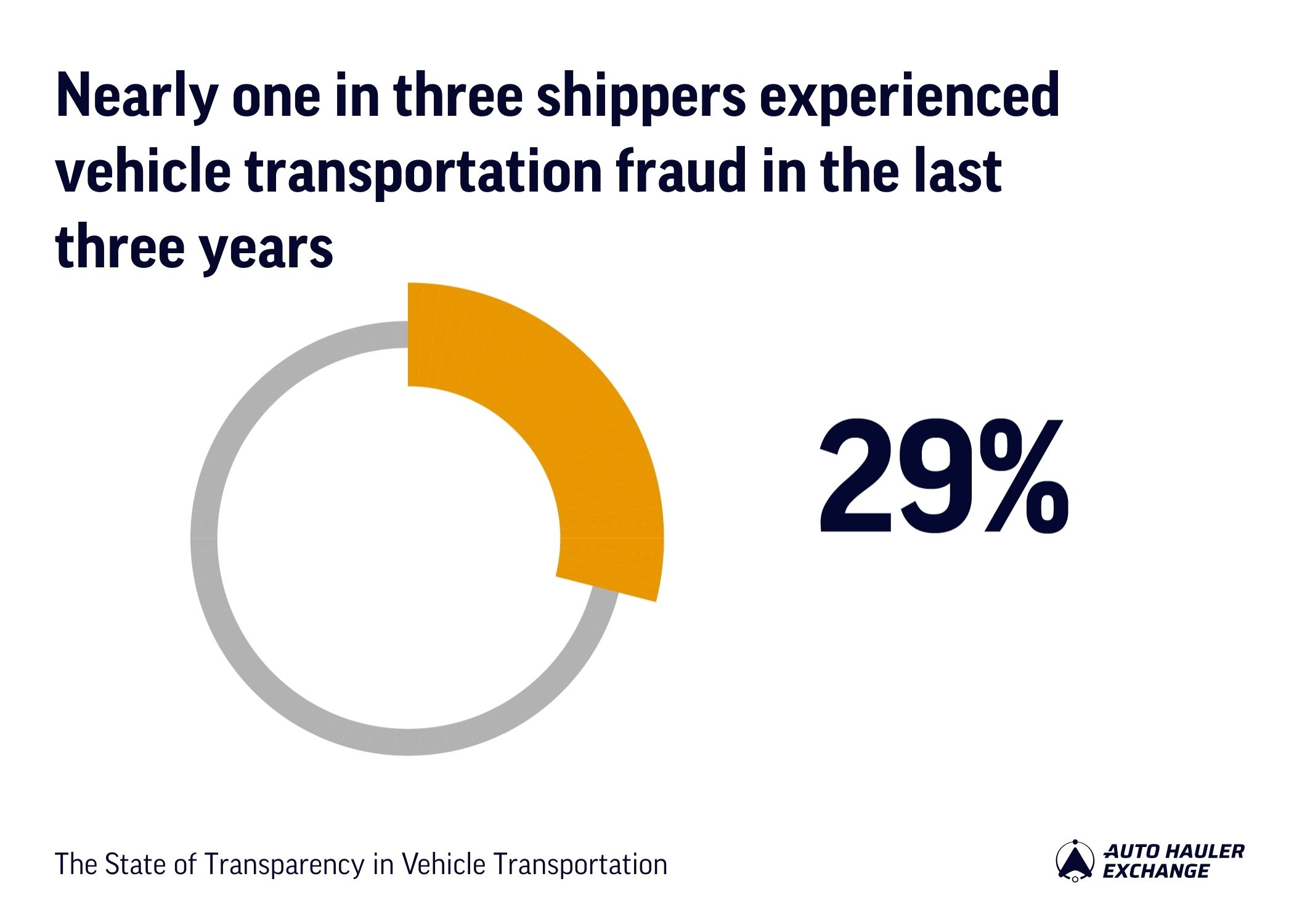
Nearly one in three respondents (29%) reports experiencing vehicle transportation fraud within the past three years.
The most common forms of fraud respondents report include:
- Ghost carriers, where scammers use fake credentials to secure a shipment and disappear after receiving a deposit
- Double brokering, where a broker or carrier reassigns a shipment without the shipper’s consent and pockets the price difference
- Stolen vehicles, where bad actors pose as legitimate carriers or brokers and reroute vehicles after pickup
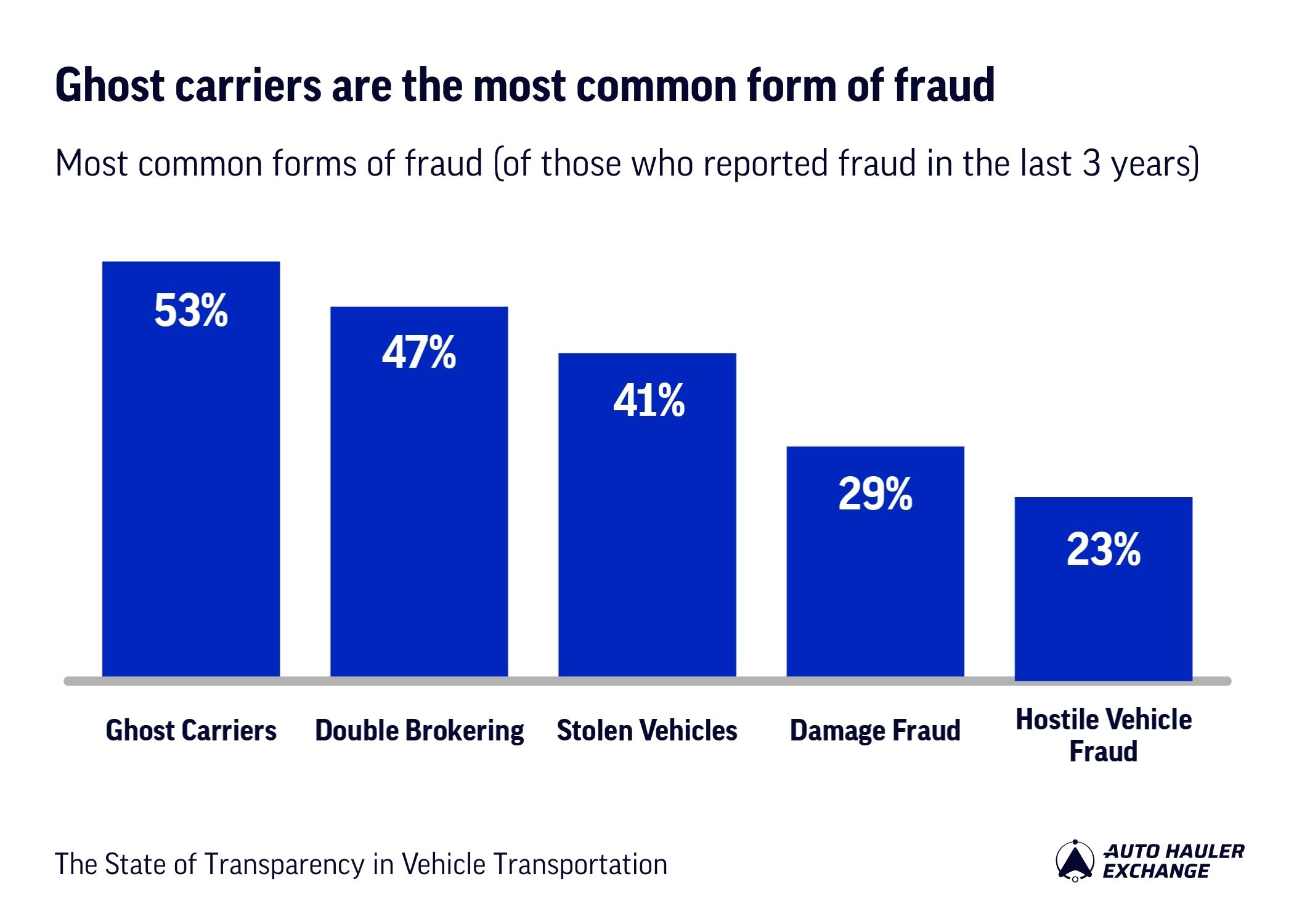
Critically, the data shows that the shipping model itself influences the likelihood of fraud. Respondents who primarily rely on brokers or load boards are 72% more likely to report fraud than those who work directly with carriers or use a direct-to-carrier marketplace like Auto Hauler Exchange.
Key takeaway: When transparency isn’t built into vehicle logistics, the risk of fraud increases
Fraud thrives in environments with low verification and limited transparency. While load boards offer flexibility and control, they don’t present carrier credentials up front, and shippers may lack the time or expertise to conduct effective due diligence. While brokers are responsible for carrier vetting, the levels of due diligence vary widely. Their credentials require vetting, too.
To ensure reliable auto transport, the first line of defense remains consistent: verifying the carriers you’re working with have Federal Motor Carrier Safety Administration (FMCSA) licensing, including both USDOT and Motor Carrier (MC) numbers, up-to-date insurance, and high safety ratings. The second line of defense is to use a shipping provider that bakes transparency into the vehicle logistics process.
98% of shippers expect their vehicles to be delivered in under eight days
When vehicles are delayed in transit, depreciation, interest, and holding costs increase and erode a dealership’s bottom line. It’s why the demand for fast delivery is nearly universal among shippers, and why they expect it as the standard.
Nearly half (49%) of respondents expect delivery in under four days, and 44% expect delivery within five to eight days. Only 7% anticipate timelines exceeding eight days.
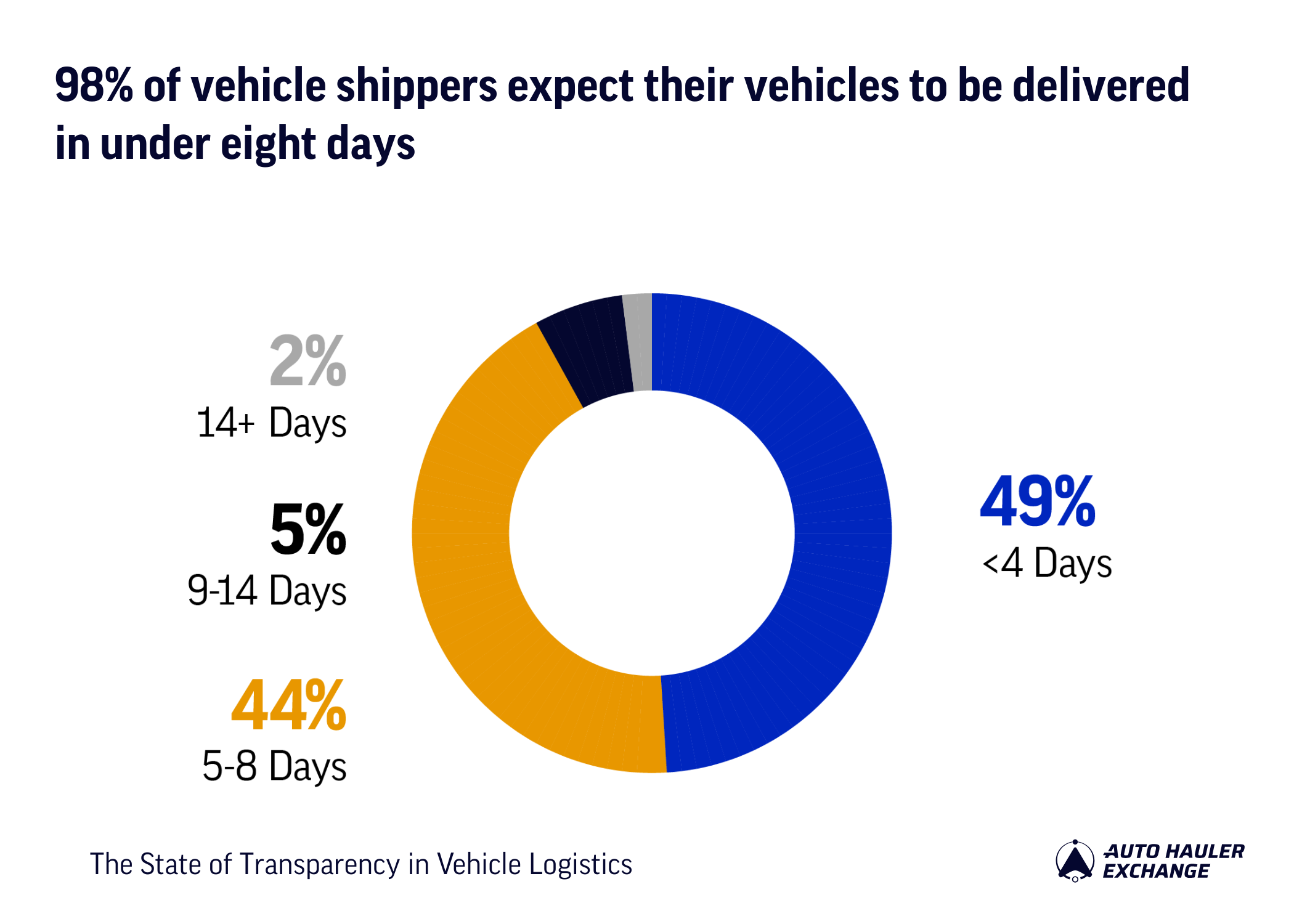
Yet survey results indicate that the market fails to meet this demand, with 34% of respondents still citing ‘speed’ as a major pain point.
Diving deeper into this finding, the data points to a gap between expectations and reality. While most shippers expect vehicles to arrive within eight days, this expectation isn’t always met in practice.
Nearly one in five broker-reliant shippers report that vehicles do not often arrive within the quoted timeframe, suggesting that many brokers underquote their ETAs. That’s a failure rate 4.5X higher than for shippers using Auto Hauler Exchange and 2.5X higher than for those working directly with carriers.
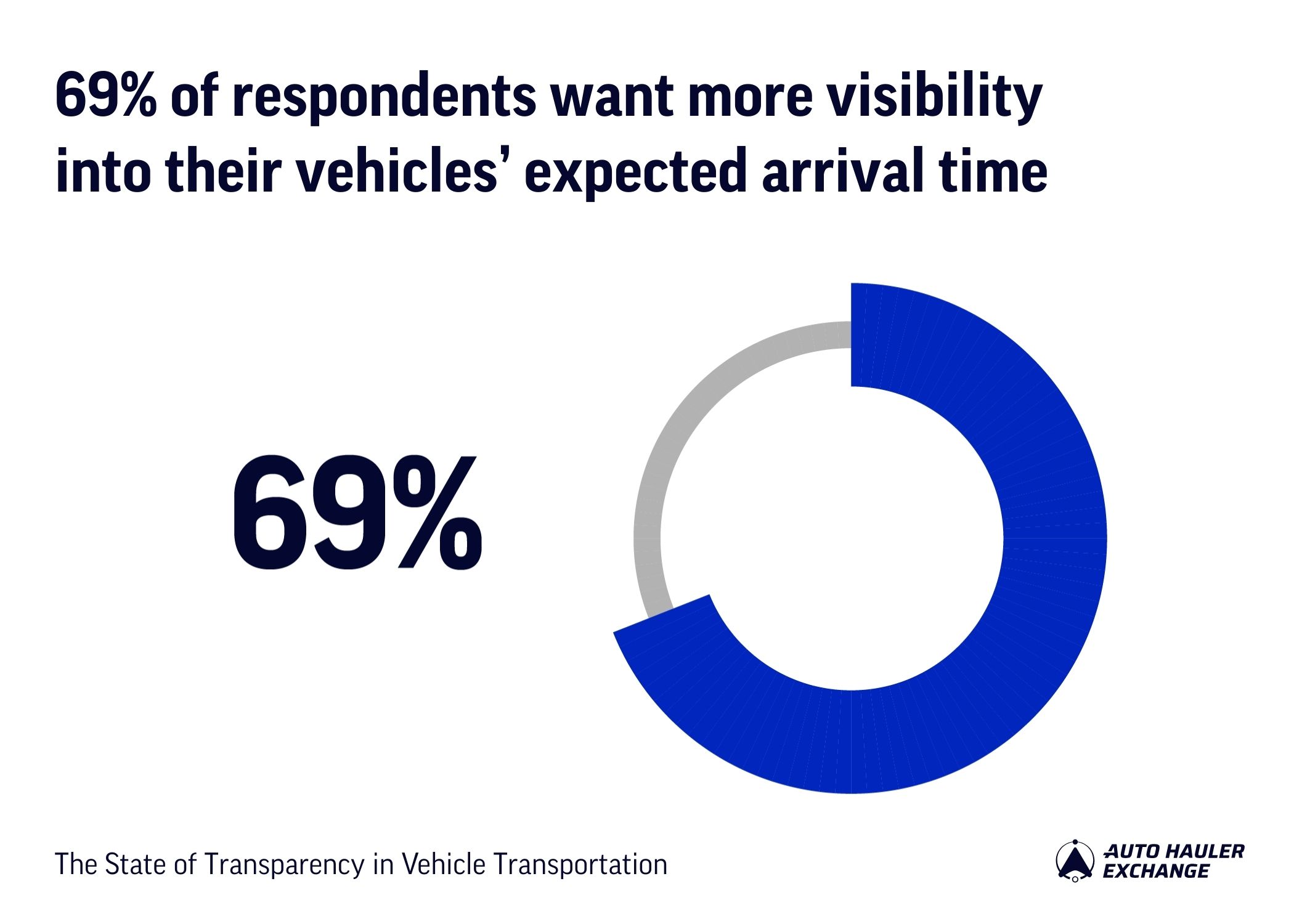
It’s no wonder 69% of all respondents report wanting more visibility into expected arrival times.
Key takeaway: There’s a gap between expected and actual vehicle delivery time
It’s clear that vehicle transportation speed is no longer negotiable. It’s a baseline requirement. While nearly half of shippers expect delivery in under four days, 34% still cite speed as a major pain point.
The disconnect between shipping speed expectations and reality suggests the issue isn’t a lack of demand, but rather inaccurate or misleading ETAs.
This is especially prevalent for broker-reliant shippers. Brokers continue to quote unrealistic delivery windows to secure business, even if the customer ultimately suffers.
Shippers don’t just want faster delivery on paper—they want honest timelines. This reinforces the notion that transparency trumps timing. What’s quoted up front must align with what actually happens.
Auto shippers have significant blind spots in vehicle transportation costs
Survey data shows that vehicle shipping spend varies widely. Roughly 40% of respondents spend between $1,000 and $50,000 annually, approximately 30% spend between $50,000 and $250,000, and only 14% have vehicle logistics budgets that surpass a quarter million dollars.
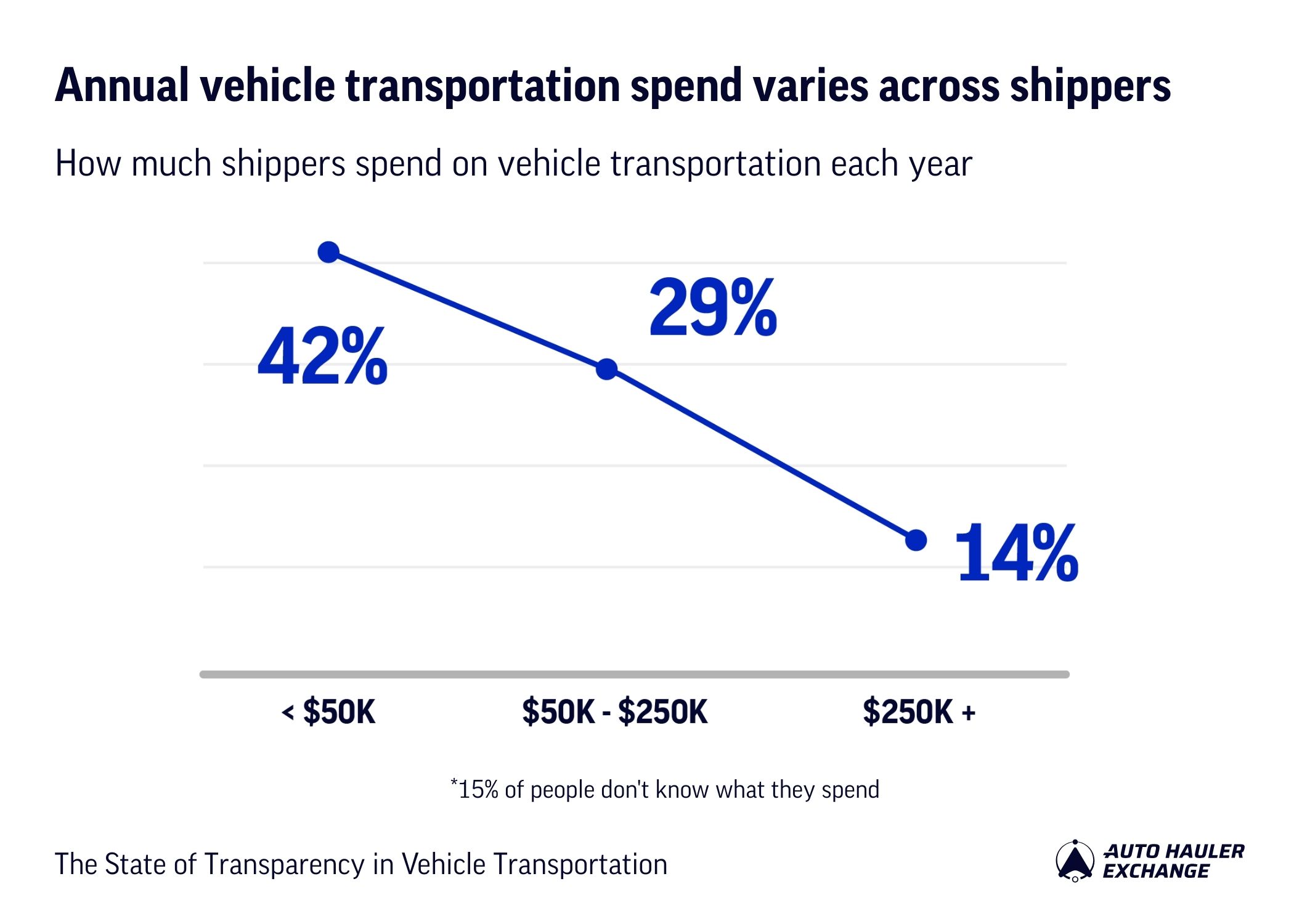
While the vast majority of respondents know what they pay, the survey indicates they don’t have a comprehensive understanding of all their costs: 46% don’t know how much an additional day of transportation costs them, and 24% say they want more visibility into the cost per vehicle moved. Plus, a notable 15% of respondents have no pulse on their annual vehicle shipping spend at all.

Generally, the more shippers spend on vehicle shipping, the more likely they are to know or somewhat know how much each extra day in transit costs them. But, several high-spend segments still report limited understanding, suggesting that spend alone doesn’t drive cost visibility.
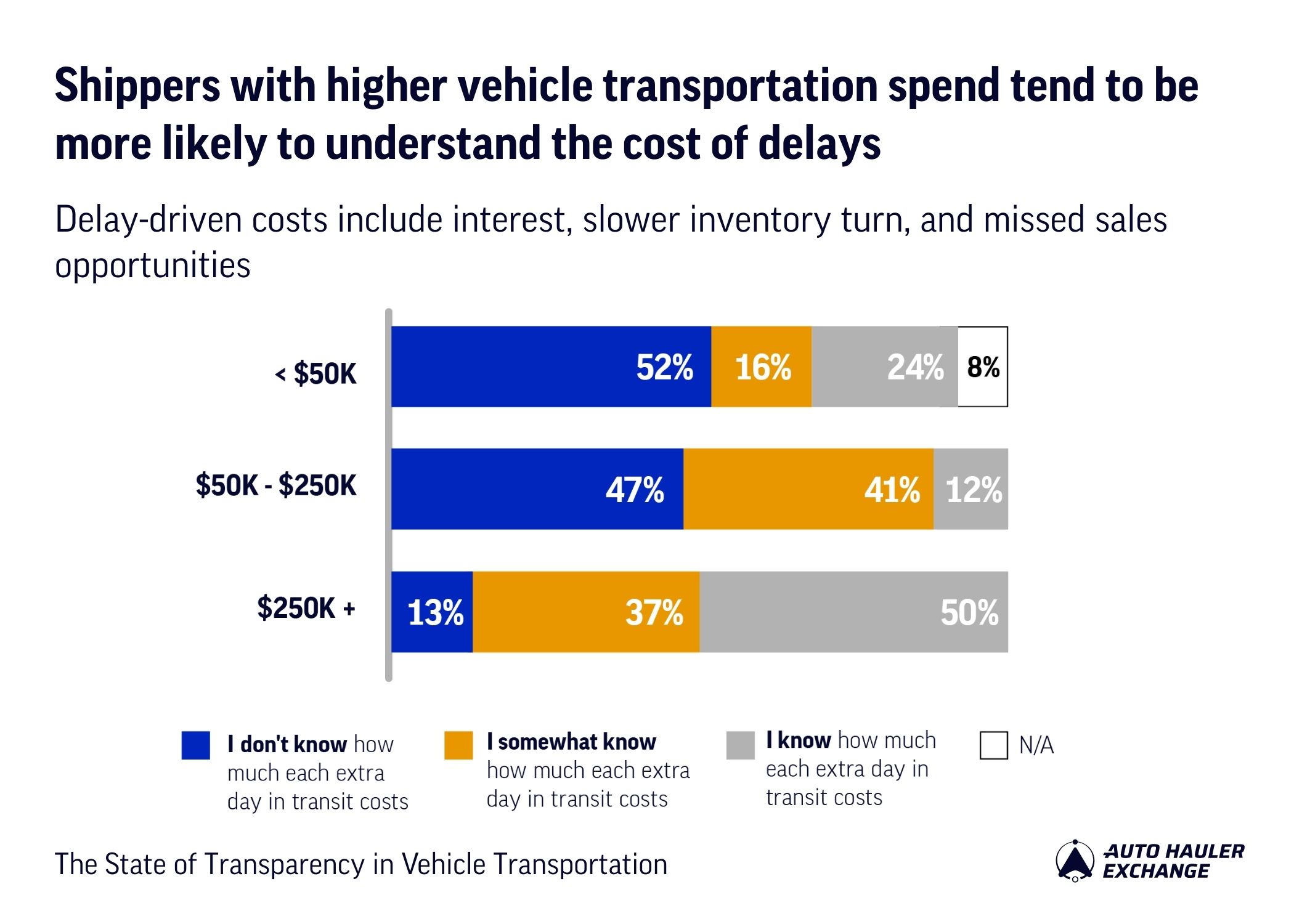
Key takeaway: Time is the least understood cost driver
Shippers lack clear visibility into vehicle logistics spend. Nearly one in four respondents want better insight into cost per vehicle, and roughly one in six don’t know their annual transportation spend at all.
Even when shippers know what they pay to move vehicles, many can’t quantify the cost of an extra day in transit. As a result, depreciation, interest, and holding costs quietly erode margins without accountability.
Developing a clearer understanding of auto shipping costs, including cost drivers, hidden expenses, and the shipping models that favor transparent pricing, would help shippers keep more money in their pockets.
Satisfaction with vehicle logistics transparency is moderate, while demand for more is almost unanimous
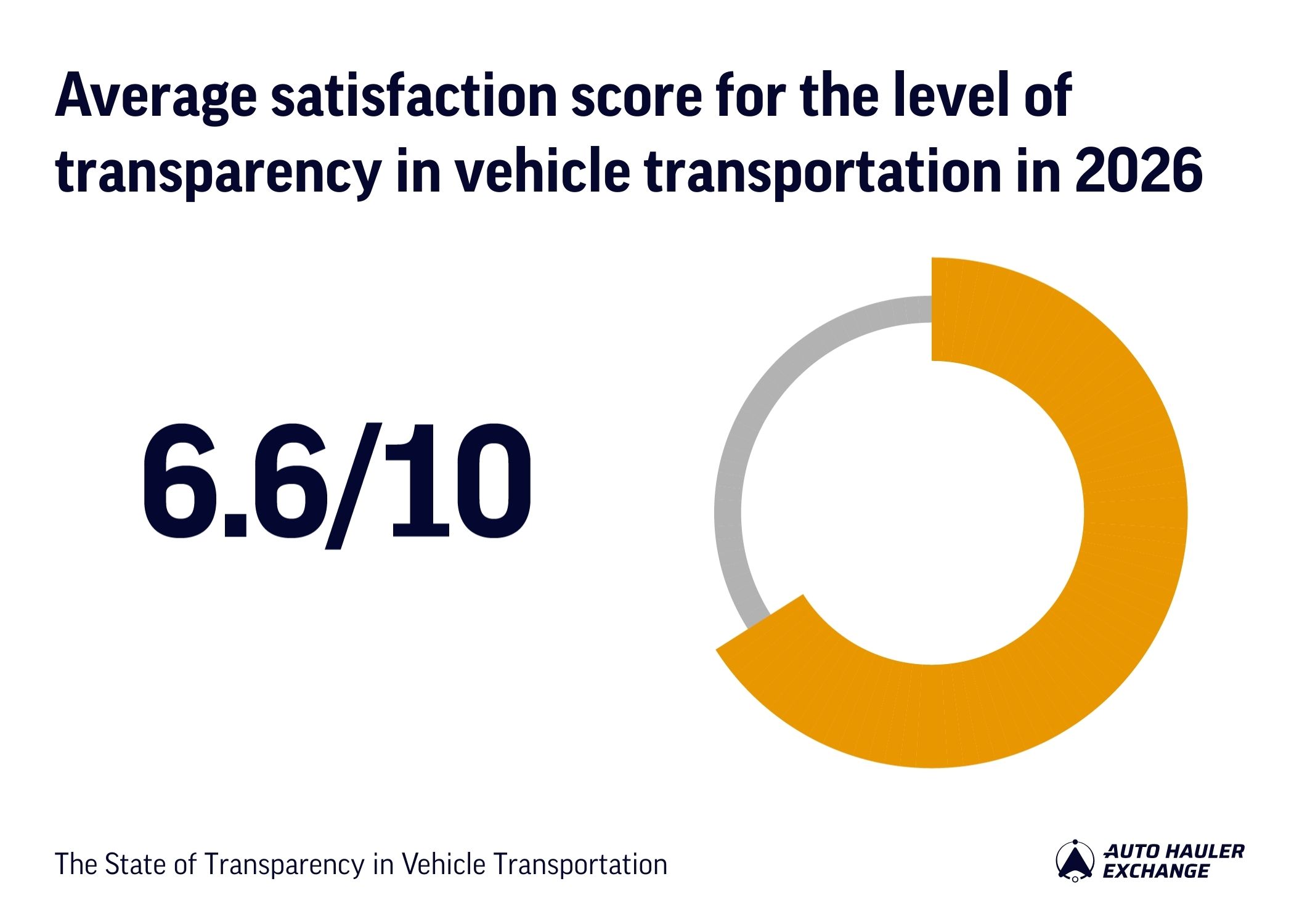
On average, respondents rated transparency in vehicle transportation at 6.6 out of 10. This D rating indicates that, overall, shippers find the level of transparency acceptable but far from excellent. While they’re not openly dissatisfied with current transparency levels, they’re not reassured either.
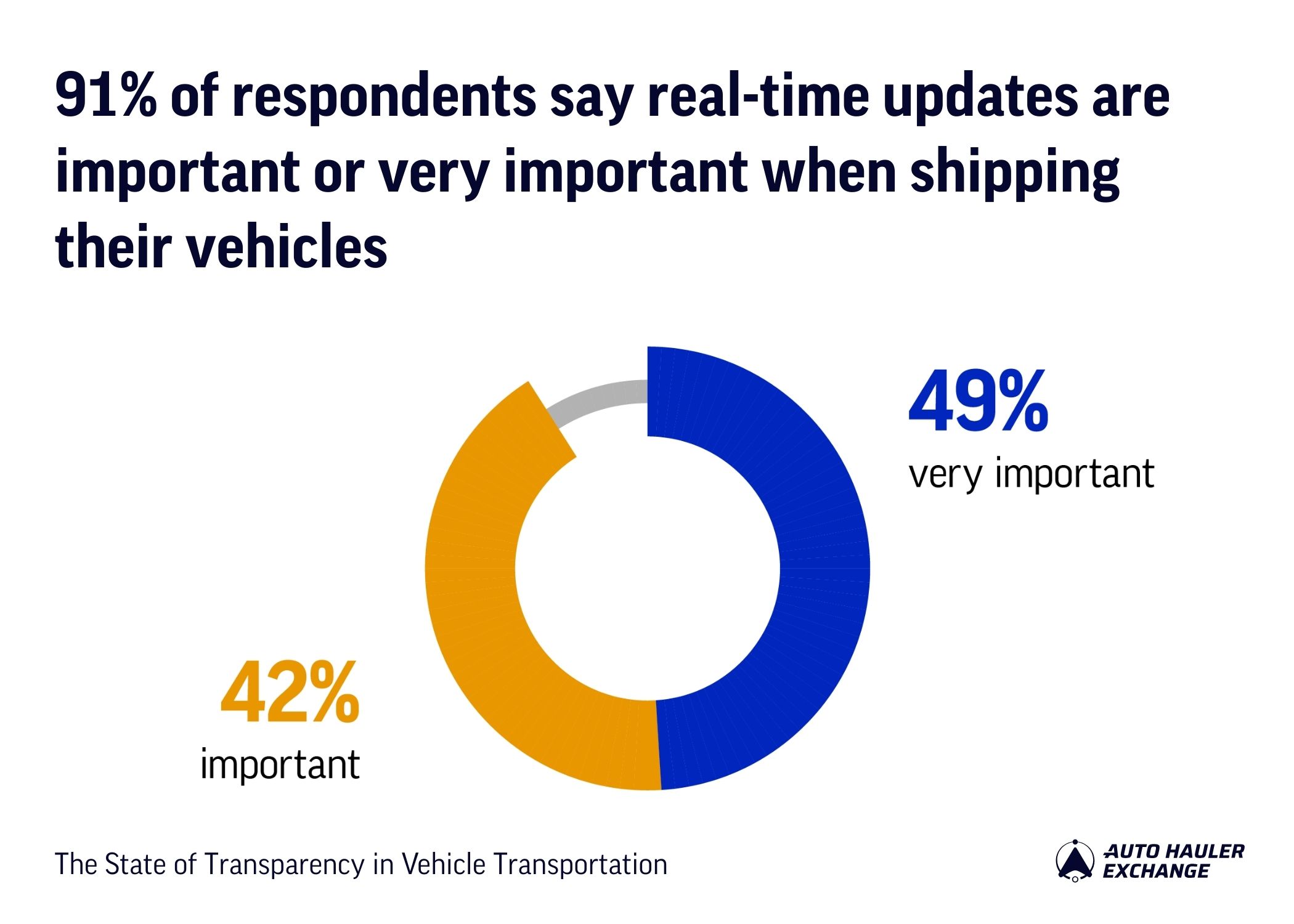
For example, 91% of shippers consider real-time updates to be important or very important.
When asked what types of transparency mattered most, respondents emphasized expected arrival times (69%), location tracking (59%), and delays (47%).
Upon closer examination, the survey reveals that satisfaction varies meaningfully by shipping model. Respondents working with brokers report the lowest satisfaction with transparency, whereas those using Auto Hauler Exchange report the highest.
.jpg)
Key takeaway: Transparency translates to confidence
Transparency is not uniform across the industry and is just another reason why direct shipper access beats working with brokers. When shippers know who’s responsible for the shipment, they have reassurance that their vehicle will arrive undamaged. When they have a pulse on true market rates, they have confidence that they’re paying a fair price. When they can see where their vehicle is in real time, they’re assured there’s no fraudulent activity and can make more accurate sales plans.
For shippers, lifting the proverbial hood on vehicle logistics isn’t necessarily a burden. It gives them the information they need to be confident in the logistics process.
Strategies to build the future of vehicle logistics
The results of this study point to a clear transparency gap in the vehicle transportation process.
Shippers want end-to-end visibility into the shipping process, including expected time of arrival, real-time vehicle location, and delays. Greater transparency directly affects their biggest pain points—finding reliable carriers, improving delivery speed, and controlling overall cost.
The good news for the vehicle logistics industry? Transparency benefits carriers, too. When the curtain is pulled back on vehicle shipping, reputable carriers can build stronger business relationships, stand out based on good performance, and charge the prices they deserve.
To fulfill the demand for transparency, here are strategies the vehicle logistics industry can use to shape a more accountable future.
Reduce fraud by eliminating opaque intermediary models
Protecting shippers from bad actors starts with rethinking an outdated model. Black-box broker workflows and unvetted load boards create the conditions for fraud to thrive. Instead, the industry should move toward models where shippers know exactly who is hauling their vehicle, and carrier credentials and verification are visible from the outset.
As in other service-driven businesses, customer reviews and performance histories enable shippers to rely on peer experience when making decisions. Carrier identity and accountability should be built into the transaction.
Leverage data to align delivery expectations with reality
The data confirms a disconnect between promised timelines and actual delivery performance. Shippers want more visibility into accurate arrival times and delays.
Digitization has made more data available than ever before, yet vehicle logistics has been slow to capitalize on the technology that would enable it to leverage historical trends. By leveraging data-driven technologies and AI models that analyze vehicle shipping trends, such as historical performance, lane data, and carrier behavior, the industry can present pricing and delivery timelines grounded in reality.
Treat time as a cost
Delays are inconvenient. But more importantly, they silently chip away at profitability. Each additional day a vehicle is in transit shrinks margins through factors like interest, holding costs, and missed sales opportunities.
If shippers treat time as a core component of shipping cost, not a separate consideration, they can make informed decisions about which transportation option to use. Today, however, inconsistent and unreliable timelines make it difficult to assess whether delivery commitments are truly accurate.
More transparency into carrier identity and history can help shippers make informed decisions about their vehicle logistics. This way, shippers can move beyond hopeful estimates and begin relying on timelines they can trust, protecting margins and restoring confidence in the shipping process.
Demographics and methodology
The State of Transparency in Vehicle Transportation report was developed using answers from 59 respondents who identified themselves as vehicle shippers. Answers for the report were collected between December 2, 2025 and December 15, 2025.
Types of businesses
- Dealer: 85%
- Auction: 3%
- OEM: 3%
- Other: 9%
Volume of cars moved/year
- 1-50: 34%
- 51-100: 15%
- 101-500: 24%
- 501-1,000: 20%
- 1,001+: 5%
- I don’t know: 2%
Primary method of transporting vehicles
- Auto Hauler Exchange (marketplace): 44%
- Brokers: 19%
- Load boards: 10%
- Working directly with carriers: 24%
- Other: 3%
Other methods include “auction shipping” and “Buyer selects transporter”
Location
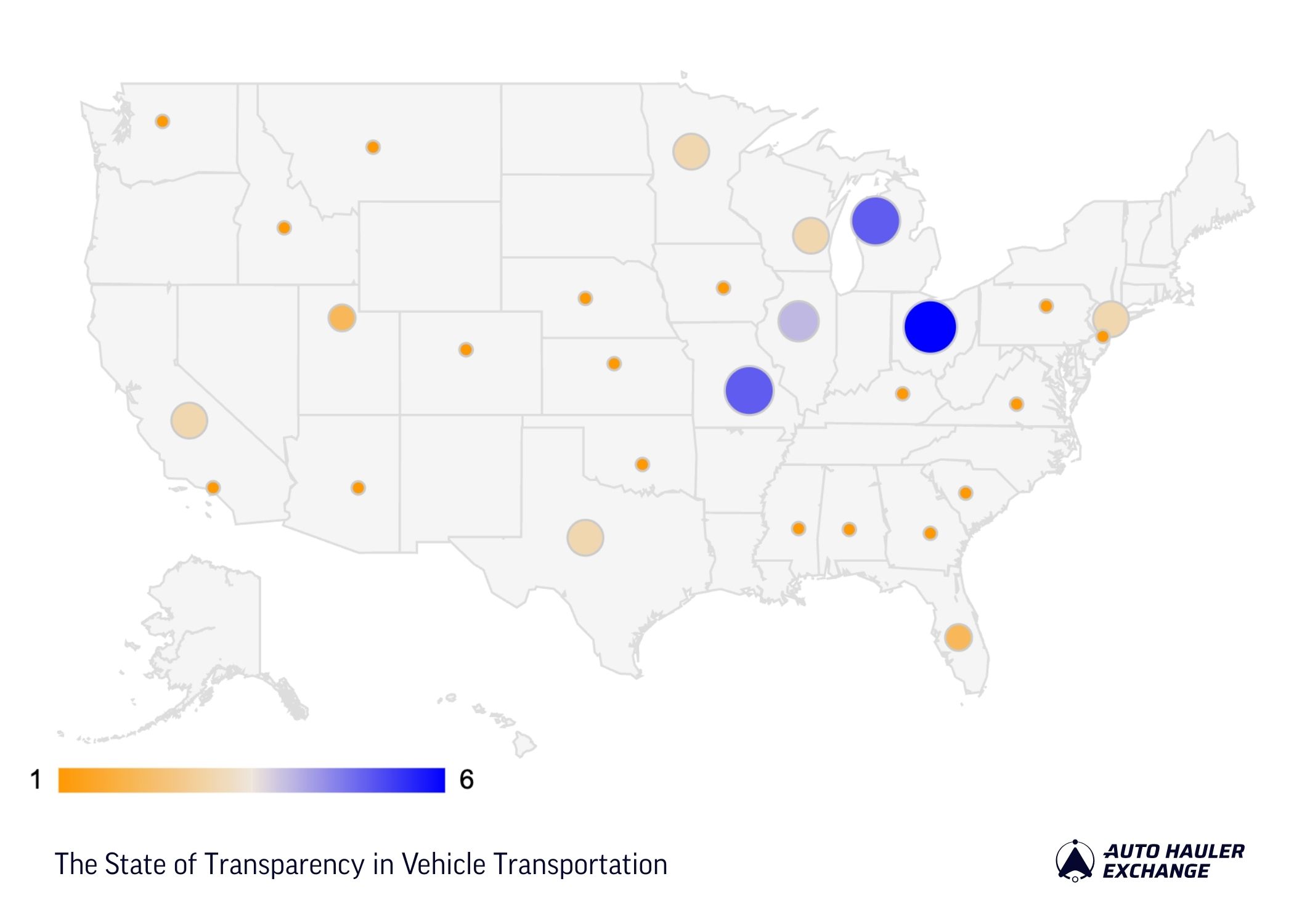
- AL: 1
- AZ: 1
- CA: 3
- CO: 1
- FL: 2
- GA: 1
- IA: 1
- ID: 1
- IL: 4
- KA: 1
- KY: 1
- LA: 1
- MI: 5
- MN: 3
- MO: 5
- MS: 1
- MT: 1
- NE: 1
- NJ: 1
- NY: 3
- OH: 6
- OK: 1
- PA: 1
- SC: 1
- TX: 3
- UT: 2
- VA: 1
- WA: 1
- WI: 3
- Unknown: 2
Thank you for reading!
If you have any questions about the data, please feel free to email us at marketing@autohaulerx.com.