.png)
Vehicle transportation scams are becoming more common across the United States. As technology improves, so do the tactics used by scammers. What once looked like obvious fraud can now appear surprisingly legitimate.
Fake websites, cloned company identities, and automated messaging tools make it easier than ever for bad actors to pose as legitimate carriers or brokers. As a result, many dealerships, auctions, and fleet operators have encountered fraud at some point in the shipping process.
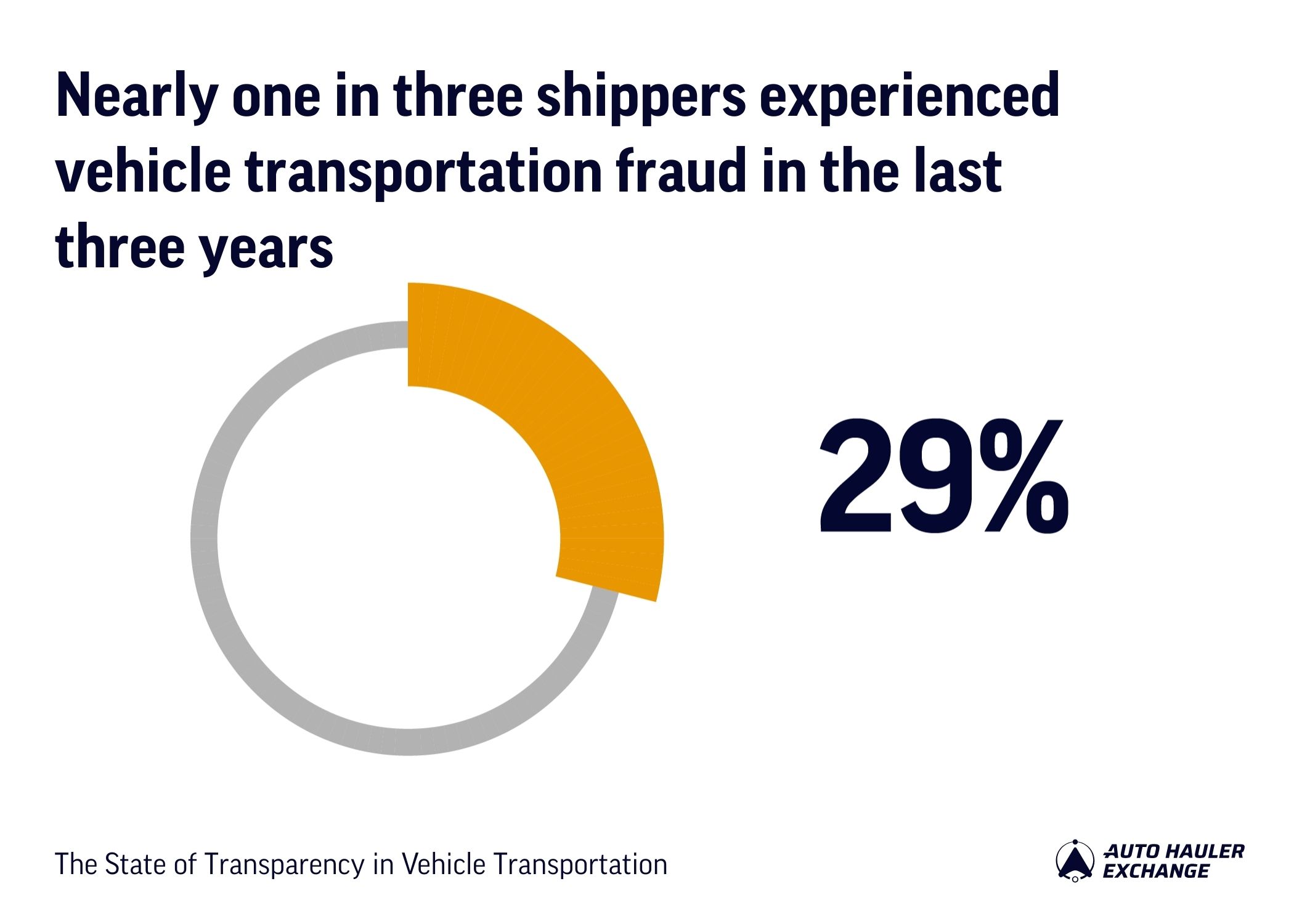
In fact, according to the State of Transparency in Vehicle Transportation, nearly one in three shippers report experiencing vehicle transportation fraud.
Understanding the most common auto transport scams is the first step toward protecting your shipments. The more familiar you are with how these schemes operate, the easier it is to spot warning signs before a vehicle is put at risk.
Before we break down the most common scams, it’s important to understand how modern technology, especially artificial intelligence, is changing the way fraud operates in vehicle logistics.
How AI Is Impacting Vehicle Transportation Scams
AI makes many business operations more efficient, but it also makes scams more convincing.
Fraudulent operators can now build professional-looking websites in minutes, generate fake company profiles, and automate communications that sound completely legitimate. In some cases, scammers even copy branding and details from real carriers or brokers.
AI tools allow scammers to:
- Create realistic carrier websites and company identities
- Generate convincing DOT and MC credentials
- Automate emails, chat messages, and phone calls
- Impersonate legitimate carriers or brokers
It’s now easier for scam operations to appear polished and trustworthy on the surface. This growing sophistication is why transparency and direct communication matter more than ever. When shippers know exactly who they’re working with and can verify carrier credentials directly, the chances of fraud decrease.
The Most Common Auto Transport Scams
Auto transport scams take many forms, but most of them follow recognizable patterns. Knowing what these scams look like can help you avoid major disruptions to your vehicle logistics operations and damage to your business’s reputation.
Below are five of the most common scams affecting vehicle shipments today.

Ghost Carriers
Ghost carriers are one of the most frustrating scams for shippers.
In this situation, a carrier accepts a shipment but disappears before completing it. Sometimes the vehicle is never picked up. Other times, the carrier collects payment information and vanishes before delivery is ever scheduled.
The State of Transparency in Vehicle Transportation report found that 53% of shippers have encountered ghost carrier fraud.
The warning signs can be subtle. A carrier might have very limited contact information, vague documentation, or inconsistent responses when asked basic questions. Communication may also drop off completely after the shipment is booked.
If you can’t confidently verify who the carrier is and how they operate, it’s best to pause the process before moving forward.
Double Brokering
Double brokering is another common issue in vehicle logistics.
This happens when a broker accepts a shipment but secretly passes it to another broker without the shipper’s knowledge or approval. The shipper may believe one company is responsible for the vehicle, while, in reality, an entirely different company is handling the shipment.
Nearly 47% of shippers report experiencing double brokering issues.
The biggest problem with double brokering is accountability. When multiple parties are involved without transparency, it becomes difficult to determine who’s responsible if something goes wrong.
👉 If you want a deeper explanation of how brokers operate, our Complete Guide to Auto Transport Brokers breaks down the structure and risks that can come with broker-based shipping.
Stolen Vehicles
Vehicle theft is one of the most serious outcomes of transport fraud.
In these situations, a fraudulent carrier presents fake credentials, picks up the vehicle, and never delivers it. Because the documentation may appear legitimate at first glance, the issue often isn’t discovered until the vehicle fails to arrive.
About 41% of shippers report theft-related incidents involving vehicle shipments.
Often, the warning signs appear in the details. Carrier paperwork may contain inconsistencies, insurance documentation may be difficult to verify, or payment requests may seem unusual.
Damage Fraud
Damage fraud is often avoidable if you take the right precautions.
It happens when a vehicle arrives damaged and the carrier claims the damage was already present at pickup. In reality, the damage occurred in transit and should be the carrier’s responsibility.
Around 29% of shippers report experiencing damage-related fraud.
One of the best ways to prevent this issue is simple: documentation. Clear photos, inspection reports, and detailed bills of lading make it much harder for fraudulent claims to succeed.
Hostile Vehicle Fraud
Hostile vehicle fraud is sometimes referred to as a “hostage shipment.”
In this situation, the carrier refuses to deliver the vehicle unless additional payments are made beyond the original agreement. These unexpected payment demands can occur while the vehicle is in transit or even after it reaches the delivery location.
About 23% of shippers report encountering this type of scam.
These situations often begin with sudden pricing changes or vague explanations about additional costs. When the carrier refuses to release the vehicle without payment, the shipper is put in a difficult position.
How to Avoid Auto Transport Scams
While scams are becoming more advanced, so are the ways to protect your shipments. Most fraud happens when visibility is limited, and verification steps are skipped.
Taking a few preventative measures can help protect your shipments.
Conduct Operational Checks at Pickup and Delivery
One of the simplest ways to protect a shipment is also one of the most effective: documentation.
At pickup and delivery, shippers should verify paperwork, inspect the vehicle carefully, and take timestamped photos showing its condition. These steps create a record that protects both the shipper and the carrier if disputes arise later.
Verify your Carriers
Before allowing any carrier to handle a vehicle, their credentials should be verified.
This includes confirming their FMCSA registration, checking their insurance documentation, and reviewing their operating history. If the information provided by the carrier can’t be verified independently, that is a major red flag.
Choose Your Booking System Carefully
How you book shipments can matter more than many shippers realize.
Brokers and load boards often create layers between the shipper and the carrier. In these systems, the shipper may not actually know who’s moving their vehicle.
Research shows that shippers who rely primarily on brokers or load boards are 72% more likely to report fraud incidents compared to those working directly with carriers or through marketplaces like Auto Hauler Exchange.
This is largely because brokers can obscure carrier relationships, while load boards require you to do your own due diligence. Verifying insurance, checking authority status, and confirming a carrier’s track record can take time—and if something looks legitimate at first glance, it’s easy to miss red flags.
Marketplaces like AHX help reduce that risk by vetting carriers before they ever appear on the platform. That means shippers can connect directly with verified carriers rather than starting from scratch with every shipment.
Finding reliable auto transport starts with knowing who’s moving your vehicle. Choosing a shipping method that provides transparency and a layer of carrier verification can go a long way toward protecting your shipment.
Leverage Technology
Technology is becoming one of the strongest defenses against fraud in vehicle logistics. When you have random calls coming through asking for a gate pass, it can be difficult to verify what’s legitimate and what’s not.
Modern platforms can provide secure shipment tracking, verified carrier networks, and transparent pricing tools that reduce the chances of scams slipping through the process.
One dealer explains that using Auto Hauler Exchange makes their shipments more secure by streamlining communication and sensitive information in one platform.
When the shipping process is transparent and technology-driven, it becomes much harder for fraudulent operators to hide.
Steps to Take If You Fall Victim to a Scam
Even experienced shippers occasionally encounter fraud. If that happens, acting quickly can help limit damage and improve the chances of recovery.
Start by keeping detailed records of everything related to the shipment. Contracts, emails, text messages, inspection reports, and bills of lading can all become critical evidence during an investigation.
Next, report the incident as soon as possible. The Federal Motor Carrier Safety Administration (FMCSA) and local law enforcement should both be notified, along with your insurance provider.
If payments were made to a fraudulent company, contact your financial institution immediately. Banks often have fraud reporting processes that allow payment reversals if the issue is caught quickly.
It can also help to alert your professional network. Dealer groups, logistics partners, and transportation communities frequently share fraud alerts to prevent scams from spreading.
Finally, explore whether there are recovery options through insurance claims, legal action, or financial dispute processes.
Moving Vehicles With More Transparency
Vehicle transportation scams thrive in environments where transparency is limited.
Traditional broker-based systems often hide key details such as carrier identity, true shipment pricing, and direct communication channels. When those details are unclear, it becomes easier for fraudulent operators to insert themselves into shipments.
Auto Hauler Exchange was built to solve this problem.
As a true marketplace for vehicle logistics, Auto Hauler Exchange connects shippers directly with carriers, removing the broker entirely. Shippers know exactly who’s moving their vehicles, what the carrier is being paid, and where the shipment stands throughout the process.
The Exchange currently includes 5,500+ vetted carriers, all of whom are continuously monitored to maintain high delivery standards.
By increasing transparency and enabling direct communication between shippers and carriers, Auto Hauler Exchange helps reduce fraud risk while improving delivery speed and efficiency.
In a world where auto transport scams continue to evolve, transparency isn’t just helpful—it’s essential for moving vehicles safely.