
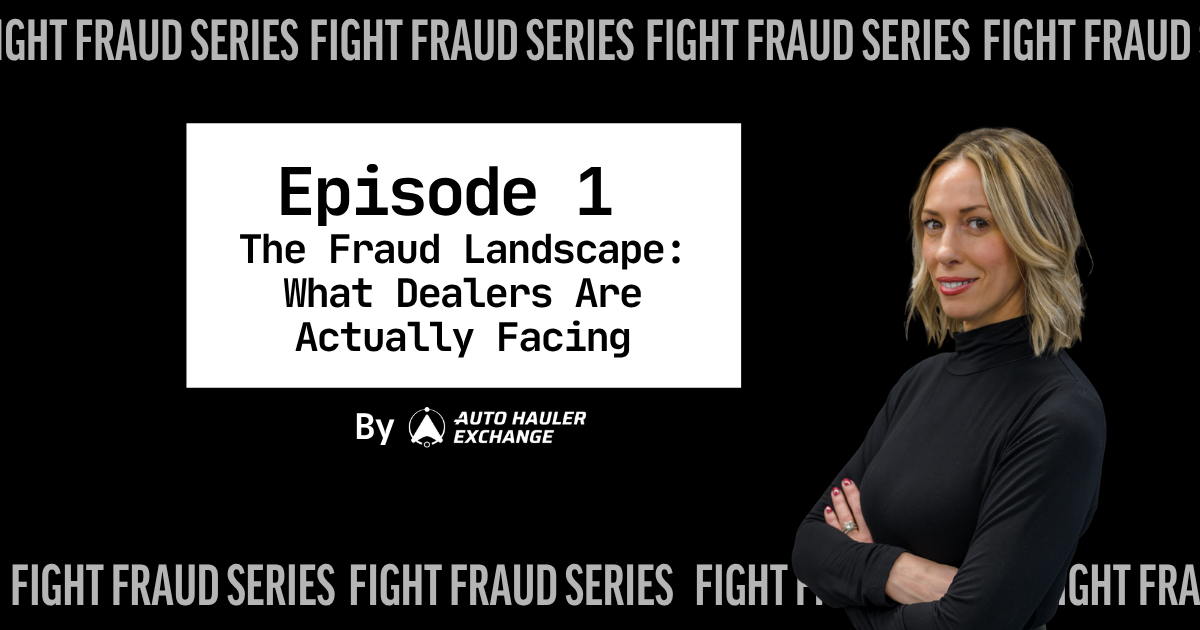
Episode 01 of the Fight Fraud Series with Dana Randazzo, COO, Auto Hauler Exchange
Strategic cargo theft, driven by stolen identities and forged paperwork rather than bolt cutters, has surged 1,500% since Q1 2021, according to CargoNet data cited by the American Trucking Associations. Vehicle transport is not immune to these tactics, which have evolved from opportunistic to organized.
Three methods drive most fraud in this sector:
- Ghost carriers
- Double brokering
- Load board scraping
The stolen vehicle is rarely the only cost; expenses like floorplan interest, lost sales, and staff hours often exceed the vehicle's value. With 29% of shippers reporting fraud in the last three years, and those using brokers or unmonitored load boards 72% more likely to be hit, it is clear that verification must be structural. A careful employee is not a system.
To address this, Dana Randazzo, COO of Auto Hauler Exchange, developed the Fight Fraud Series. This eight-session program covers common tactics and necessary controls. This first session explores the state of fraud in vehicle transport, its growing severity, and the true cost of an incident.
Three ways vehicles get stolen in transport
Dana identifies three primary schemes driving the surge.
Ghost carriers and identity theft
Bad actors steal carrier identities. They grab logins, purchase dormant MC numbers, and clone email domains. A fraudulent operator books your load while looking, on paper, like a vetted carrier. Identity fraud of this type has risen sharply since 2021, tracking with the digitization of freight booking. When transport moved online, so did the fraud.
Double brokering
A carrier books your load. Instead of hauling it, they re-sell it to another carrier without telling you. That second carrier picks up your vehicles and delivers them to a location you never authorized. A parking lot. A residential address. The first carrier pockets the spread. The unknowing hauler drives away. Your vehicle is gone.
Load board scraping
Bad actors harvest dealership websites, load boards, and broker platforms to piece together pickup and delivery details. They cross-reference vehicle listings, auction results, and transport postings to build a convincing fake pickup scenario. The more fragmented your transport data, the more they can work with.
What a fraud incident actually costs
The vehicle is the headline number. A new unit averaging $51,000 (Kelley Blue Book, 2024) is a significant hit. But the vehicle is rarely the full cost.
Floorplan interest. At 7% APR on a $51,000 unit, every day in transit costs money. A vehicle that goes missing keeps accruing while you chase it.
The lost sale. These are often sold vehicles in transit to a customer who has already paid or financed.
Customer relationship damage. You now have to explain why the vehicle they bought isn't arriving.
Staff time. Sales, F&I, wholesale, accounting, and management all absorb hours on the incident.
Insurance friction. A commercial cargo claim isn't a same-day resolution.
"The vehicle is the headline loss. The hidden losses, the floorplan interest, the lost sale, the customer who already bought that car, those are what hurt for months." Dana Randazzo, COO, Auto Hauler Exchange
AHX's own State of Transparency in Vehicle Transportation research found 29% of shippers reported hitting vehicle transport fraud in the past three years. Shippers using brokers and unmonitored load boards were 72% more likely to report fraud than shippers using a vetted marketplace. Those aren't hypothetical risks. They're your peers' actual losses.
Why it's getting worse
Digital booking created anonymity. When transport moved to load boards and email, direct human verification got replaced by document exchange. Documents are easy to fake.
AI lowered the barrier to document fraud. Convincing fake gate passes, insurance certificates, and dispatch paperwork used to take effort. Now it takes minutes.
Load board proliferation fragmented vetting. When a load board aggregates thousands of carriers, continuous quality monitoring becomes someone else's problem.
Payment platforms made payouts frictionless. App-based payments let fraudsters disappear before you've figured out what happened.
What to do about it
Fraud prevention in vehicle transport starts with one principle: verification has to be structural, not heroic. A careful employee is not a system. Systems outlast people.
That's the thread running through all eight sessions. The controls that work are the ones that run the same way on a Tuesday morning as they do on the Friday your best wholesale manager is out.
For what a vetted marketplace does differently, see Marketplace vs. Broker vs. Load Board: What Dealers and Carriers Should Know.
For the full cost picture beyond the rate, read The Hidden Vehicle Transportation Costs For Dealerships.
Watch Episode 1 free at autohaulerexchange.com/fight-fraud. Complete all eight sessions to earn your Fraud Prevention certificate and download the Vehicle Release Checklist.
FAQ
What is strategic cargo theft?
Theft that uses deception rather than force. Criminals impersonate legitimate carriers, forge dispatch paperwork, or re-broker a load to an unwitting hauler, then divert the freight to an address the owner never authorized. CargoNet data cited by the American Trucking Associations puts the increase at 1,500% since Q1 2021.
How common is fraud in vehicle transport specifically?
AHX's State of Transparency in Vehicle Transportation research found 29% of shippers experienced vehicle transport fraud in the past three years.
Does using a broker make fraud more likely?
AHX's research found shippers using brokers and unmonitored load boards were 72% more likely to report fraud than shippers using a vetted marketplace.
What does a stolen vehicle actually cost a dealership?
More than the unit. Floorplan interest keeps accruing, the sale is usually already made, and staff across sales, F&I, wholesale, and accounting absorb hours on the incident before insurance resolves anything.
Sources: CargoNet strategic theft data as cited by the American Trucking Associations; Kelley Blue Book average new vehicle value, 2024; AHX State of Transparency in Vehicle Transportation.




.png)
