
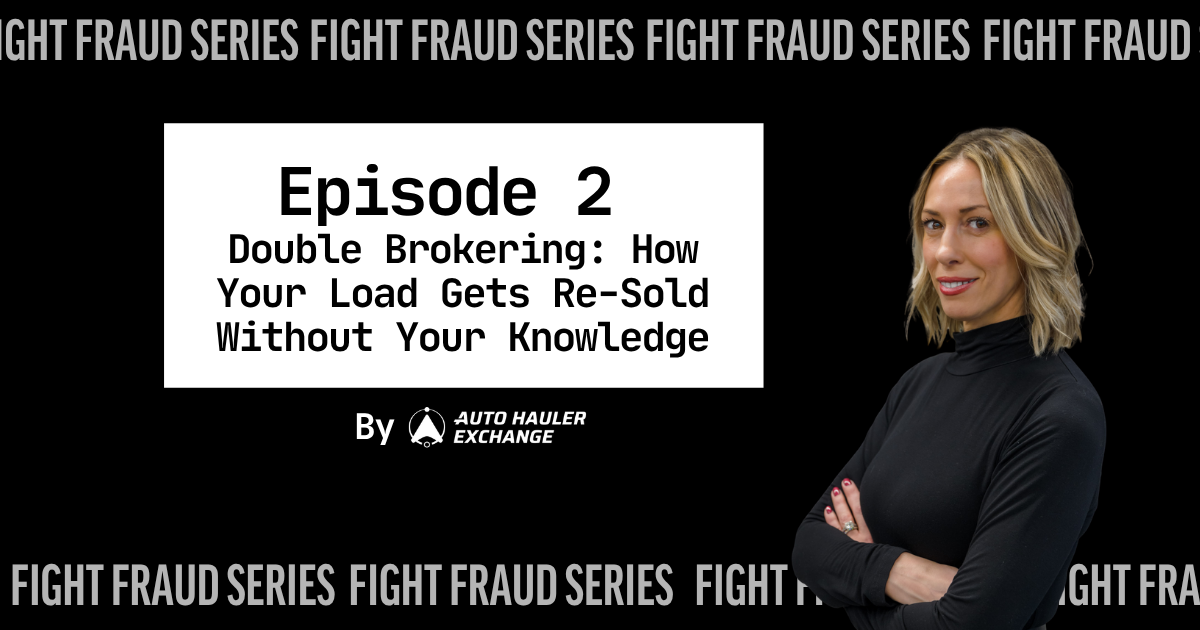
Episode 02 of the Fight Fraud Series with Dana Randazzo, COO, Auto Hauler Exchange
Key Takeaways:
- Double brokering is when the carrier you hired hands your load to another carrier without telling you.
- It doesn't always end in theft, but it's frequently the first step.
- The releasing dealer or auction is the last line of defense, and often the only party who can stop it.
- Two signs catch most of it: the carrier who shows up isn't the one on your dispatch paperwork, and the delivery address on their bill of lading doesn't match what you authorized.
- Never release a vehicle to a driver who can't produce the full 17-digit VIN.
Double brokering is a common fraud scheme in vehicle transport. It's designed to look legitimate at every step. The paperwork checks out. The carrier name is real. The pickup happens on schedule. Then the vehicle ends up somewhere it was never supposed to go.
AHX's own State of Transparency in Vehicle Transportation research found that 47% of shippers who experienced fraud cited double brokering, making it the second most reported scheme behind ghost carriers at 53%. In vehicle transport the consequences compound fast. A stolen vehicle is a titled asset attached to a financing record, a customer transaction, and your reputation.
How double brokering actually works
The carrier you hired hands your load to another carrier without telling you. This doesn't always result in a stolen vehicle. Sometimes the assigned carrier has overcommitted and needs help getting vehicles delivered, but often it's the first step in vehicle transport theft.
"Double brokering is when the carrier assigned to the load hands it off to another carrier. Sometimes they need to move vehicles quickly and they know another carrier that can handle it. But oftentimes, this is when the fraud begins." Dana Randazzo, COO, Auto Hauler Exchange
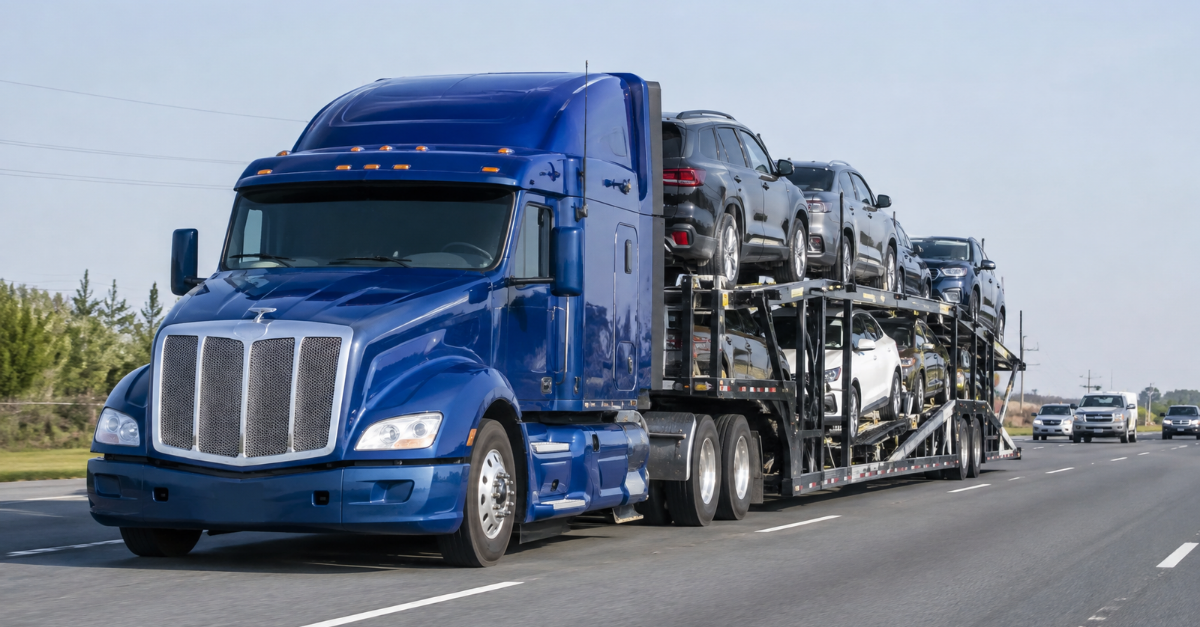
A bad actor books your load and re-sells it to a new carrier with a fake or altered delivery address. That new carrier, usually a legitimate and unknowing hauler, picks up your vehicle. They deliver it to a big-box parking lot. A shopping plaza. A residential address far from the buyer. The bad actor shows up, signs for the paperwork, pays through an app, and the vehicle is gone. The hauler drives away thinking it was a normal job.
The new carrier in that chain usually isn't a bad actor. They were handed a load with a fake address and did their job. The fraud is in the orchestration.
Why the releasing location is the last line of defense
The releasing dealer or auction frequently isn't the vehicle's owner. The buyer purchased remotely, maybe from an auction three states away, and arranged transport to their own lot. The releasing location has no direct connection to the transport arrangement. They see a carrier show up and hand over the keys.
"It is extremely important that the owner of this vehicle is in clear communication with that releasing dealership or releasing auction. They need to know where the delivery location is." Dana Randazzo
In Episode 2 of the Fight Fraud Series, Dana documents a specific pattern worth flagging: carriers arriving with no VIN at all, identifying the vehicle only by year, make, and model. One rule stops this cold. Never release a vehicle to a driver who can't produce the full 17-digit VIN.
The releasing location should also know the destination before the driver arrives. With the delivery address in hand, a paperwork check at pickup will surface an unsuspecting carrier caught in a double brokering scheme.
Signs a load has been double brokered
Carrier mismatch. The carrier who shows up isn't the one named in your dispatch paperwork.
Wrong delivery address. The driver can't confirm the delivery address, or gives one that doesn't match your records. Take the bill of lading, find the delivery address, and search it. A house or random lot 300 miles from the buyer points to a double brokering scheme.
Why the broker model enables this
Double brokering is structurally easier in an ecosystem built on brokers and load boards. When your load changes hands through parties who aren't accountable to you, verification breaks down. A vetted direct marketplace removes the re-brokering layer. When the carrier who books the load is the carrier who hauls it, there's no middle layer for a bad actor to exploit.
On AHX, carriers book instantly at your posted rate or bid back, and the carrier who takes the load is the one who shows up. AHX charges a transparent flat platform fee for that, disclosed before you book. What it doesn't do is hand your load to a party you never approved.
AHX's own research found that shippers using brokers and unmonitored load boards are 72% more likely to report fraud. That gap isn't an accident. It's the broker model working as designed.
For the structural difference between a marketplace and a broker, read Marketplace vs. Broker vs. Load Board.
Watch Episode 2 free at autohaulerexchange.com/fight-fraud. Download the Vehicle Release Checklist while you're there.
FAQ
What is double brokering?
The carrier you hired re-sells your load to a different carrier without telling you. The second carrier is often legitimate and has no idea the load was re-brokered.
Is double brokering illegal?
Re-brokering a load without the shipper's authorization violates the terms of most transport agreements and FMCSA operating authority rules. It's also the most common opening move in vehicle transport theft.
How can I tell if my load was double brokered?
Check whether the carrier at pickup matches your dispatch paperwork, and search the delivery address on the driver's bill of lading. An address with no connection to your buyer is the tell.
What should the releasing dealership do?
Confirm the carrier name, the DOT number on the truck, and the delivery address against what the buyer authorized. If any of it doesn't match, don't release the vehicle.
Sources: AHX State of Transparency in Vehicle Transportation.

.png)
