
Diesel fell again. The national average dropped 16.5 cents to $6.127 per gallon in the latest EIA survey, a 2.6% decline, and five regions slid more than 2% in a single week. That is real movement. It is also happening on a high base, because every region is still more than 50% above a year ago.
Dealers who budget transport by the week should read this as the start of a cooling trend, not a return to normal. The national average is down about 22 cents over two weeks, from $6.352 on October 26. The West Coast remains the expensive corridor at $7.110 per gallon, about 16% above the national average.
Weather adds a second layer. Flood warnings are active in east-central Florida, around Austin and San Antonio, and near Phoenix. Thanksgiving is November 26, which puts the largest carrier-availability dip of the year about two weeks out. This post covers where fuel and weather stand, what is coming on the calendar, and what to post this week.
Diesel Prices: Two Straight Weeks Down, Still Far Above Last Year
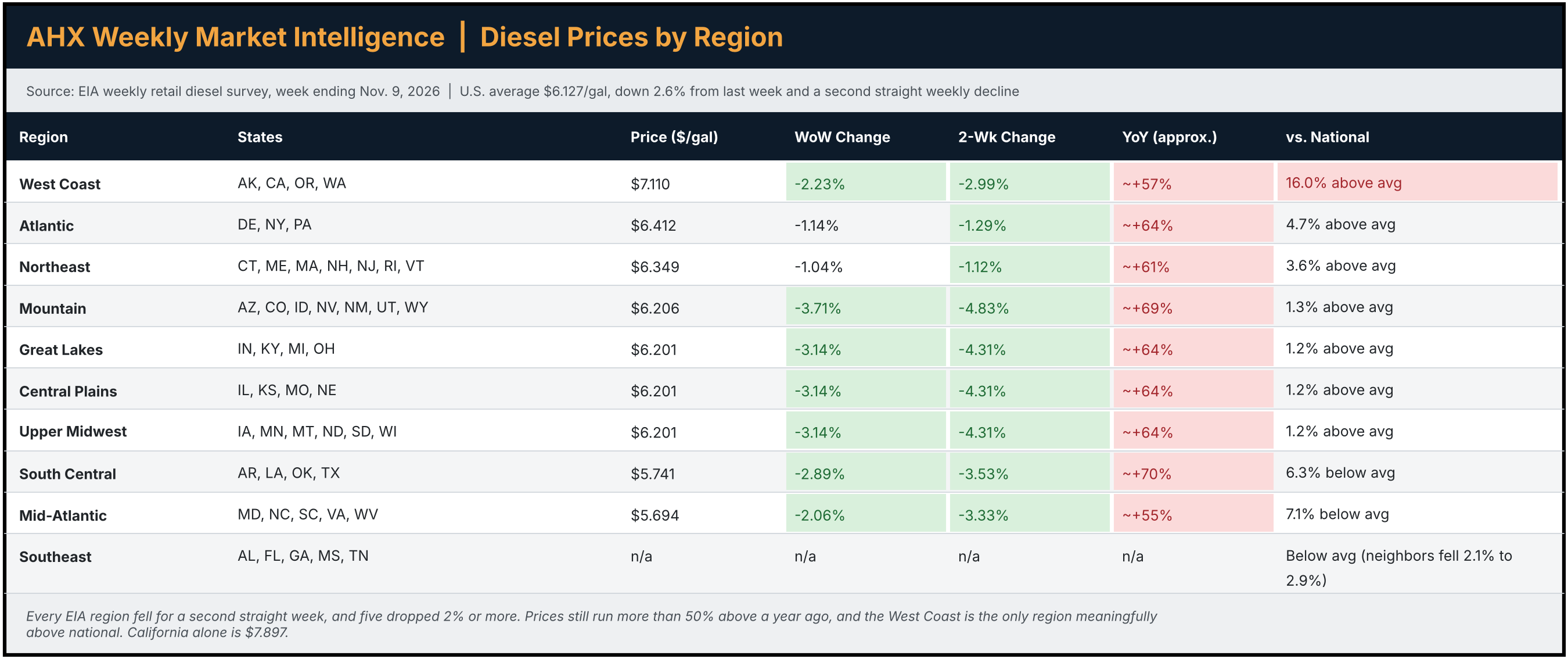
Source: EIA weekly retail diesel survey, week ending November 9, 2026. The Great Lakes, Central Plains, and Upper Midwest share one EIA Midwest reading. The Southeast has no separate EIA series; the neighboring Lower Atlantic and Gulf Coast series fell 2.1% and 2.9%. Year-over-year figures are approximate.
What the fuel numbers say
Every region EIA tracks fell for the second week in a row. The Rocky Mountain region led at -3.7%, or about 24 cents. The Midwest dropped 3.1%, about 20 cents. The Gulf Coast fell 2.9% and the Lower Atlantic 2.1%. The Atlantic and Northeast moved less, at about 1% each.
Those are useful drops. A 20-cent move on a $6 gallon matters to a carrier running a long haul. But the context matters just as much. Even Mid-Atlantic, the lowest-priced region, is roughly 55% above where it stood a year ago. Mountain and South Central are closer to 70% above.
Here is the practical read. Carrier quotes tend to trail the pump. A carrier who bought fuel at last month's price built it into the rate they quoted, so quotes will not necessarily fall as fast as diesel did. Dealers who wait for rates to catch up may wait through the holiday.
West Coast: still the expensive corridor
At $7.110, the West Coast sits about 98 cents above the national average and roughly $1.42 above the Lower Atlantic. It is the only region running meaningfully above the national average. California drives the gap. The state averages $7.897, while the West Coast without California averages $6.429, which is only about 5% above national.
For dealers, this means two things. Shipments that start or end in California carry the most fuel cost in the country. And a West Coast shipment posted at a price that worked last spring may still not clear. Run the AHX Market Estimate Tool before posting, and let the AI Pricing Engine adjust within your range if the first price is light.
Weather Alert Summary: Flooding Is the Common Thread
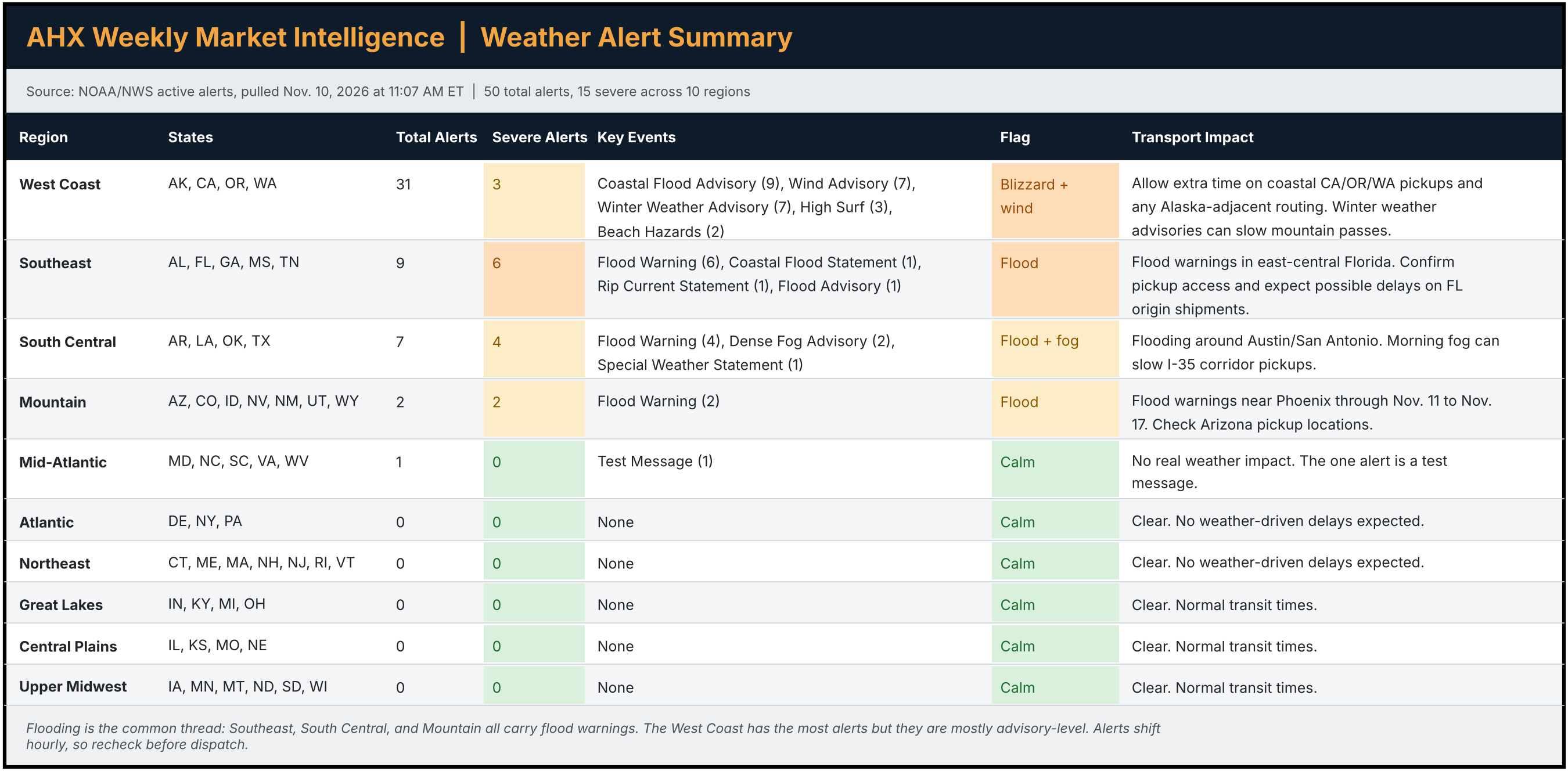
Source: NOAA/NWS active alerts as of November 10, 2026, 11:07 AM ET. Alert counts change through the day.
Southeast: Florida flood warnings
The Southeast carries the most severe alerts this week, six, all flood warnings. The headlines come from the National Weather Service office in Melbourne, which covers east-central Florida. If you have shipments leaving Orlando, Melbourne, or the Space Coast, call the seller before dispatch and confirm the lot is accessible.
South Central: flooding and fog
South Central has four flood warnings, with Austin and San Antonio named in the alerts. Dense fog advisories add a morning delay risk along I-35. Carriers can still load, but pickup windows may slide. Give them room.
Mountain: Phoenix flood warnings
Two flood warnings are active near Phoenix, and one runs through November 17. The rest of the Mountain region is quiet. Confirm pickup access for Arizona origins and keep the rest of your Mountain shipments on schedule.
West Coast: busy alert list, mostly advisories
The West Coast shows 31 alerts, but only three are severe, and the headline examples are from Alaska: a blizzard warning and a high wind warning near Fairbanks. Along the lower 48 coast, expect coastal flood, wind, and winter weather advisories. Those can slow mountain passes and coastal routes. They rarely stop a shipment, but they can add hours.
Where it is quiet
The Atlantic, Northeast, Great Lakes, Central Plains, and Upper Midwest regions show no active alerts as of Tuesday morning. Mid-Atlantic's lone alert is a test message from the weather service, not a real event.
Corridor Outlook
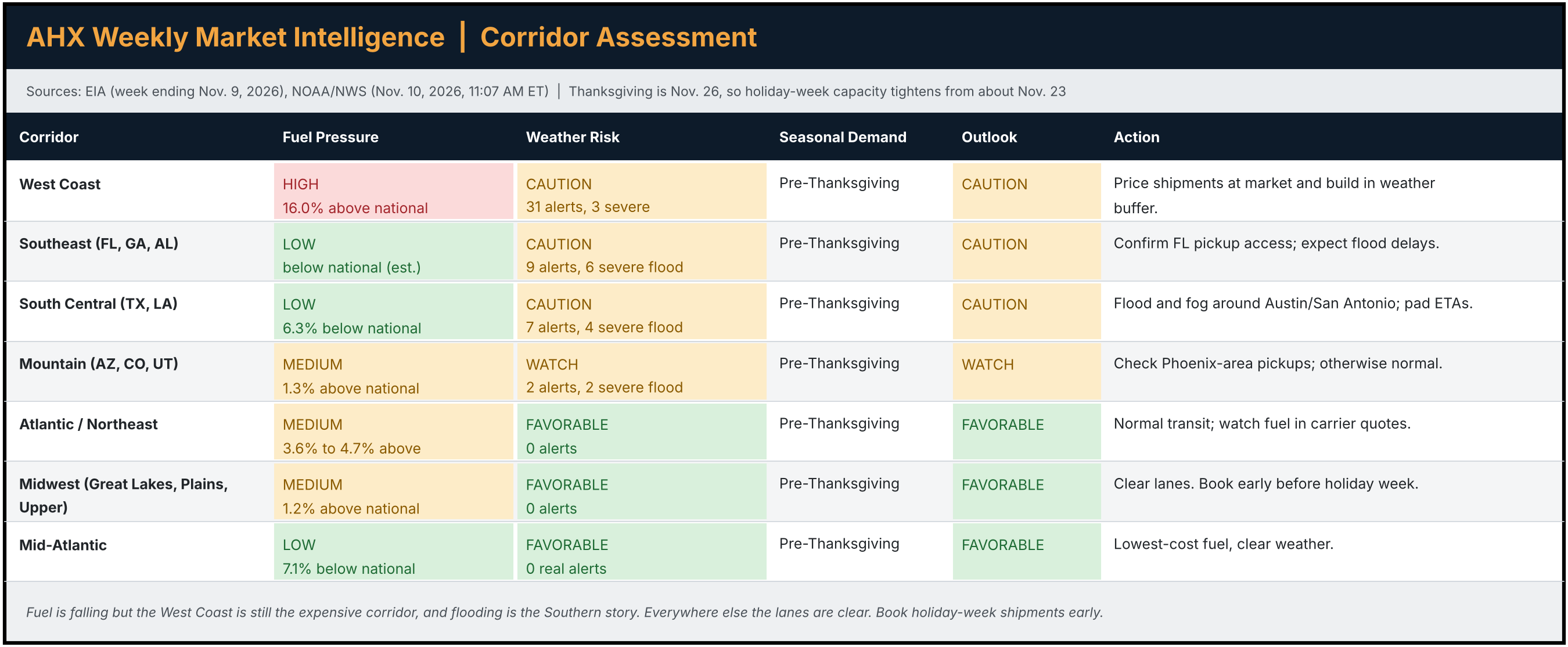
The lowest-fuel corridors are also the most flood-exposed, and the clear-weather corridors carry middling fuel. The West Coast is the one corridor with both the highest fuel cost and an active alert list, though most of that list is advisory-level. If you have flexibility on pickup timing, favor the Midwest, Northeast, and Mid-Atlantic lanes where weather is not a factor.
The Calendar: Thanksgiving Is Two Weeks Out
Thanksgiving falls on Thursday, November 26. Thanksgiving week, November 23 to 27, is the largest carrier-availability dip of the year. Many carriers head home, and the ones still running price in the holiday.
Dealers who wait until the Monday before will find fewer carriers and higher asks. Dealers who post this week and next will find carriers still on the road and willing to book. With 5,500+ vetted carriers on the AHX platform and a one-day average time from posting to carrier booking when priced at market, early posting is the easiest way to avoid a holiday scramble.
What Dealers Should Do This Week
- Post holiday-week shipments now. If you need a vehicle somewhere by Thanksgiving, aim to have it posted by the middle of next week. Carrier availability thins from about November 23.
- Rerun the AHX Market Estimate Tool before you post or repost. Fuel fell two weeks running, so a price you set earlier this month may no longer match the market. The AI Pricing Engine will adjust within your range, but a fresh estimate gives you a better starting point.
- Keep pricing West Coast shipments at market. Fuel there is still about 16% above the national average, and California is the main reason.
- Add buffer to Southern ETAs. Fog in Texas and flooding in Florida can push pickups by a few hours. Tell your sales team before they promise a delivery date to a retail customer.
- Do not hold shipments waiting for lower rates. Diesel is still more than 50% above last year, and carrier quotes lag fuel. Waiting into Thanksgiving week costs you carrier choice.
- Track every shipment. Real-time ELD tracking on all active shipments lets you see where a vehicle is when weather hits, so you can update your customer before they call you.
Frequently Asked Questions
Did diesel prices fall this week?
Yes. The national average dropped 16.5 cents to $6.127, down 2.6%, and every EIA region fell for the second straight week. Prices are still more than 50% above a year ago.
Which region has the most expensive diesel?
The West Coast, at $7.110 per gallon, about 16% above the national average. California alone averages $7.897, while the West Coast without California is $6.429.
Will carrier rates drop now that diesel is falling?
Not necessarily, and not right away. Carriers usually price on fuel they already bought, so quotes trail the pump. The AHX Market Estimate Tool shows you what the market is paying now.
Where is weather most likely to delay vehicle transport right now?
East-central Florida, the Austin and San Antonio area, and the Phoenix area, all under flood warnings as of Tuesday morning. Dense fog in Texas can add morning delays. The Midwest, Northeast, and Atlantic regions have no active alerts.
When should I post shipments for Thanksgiving week?
Aim for this week or early next week. Thanksgiving is November 26, and carrier availability drops during the week of November 23.
Does a flood warning mean my shipment will be late?
Not automatically. It means pickup access and routes may be affected. Call the origin, confirm the lot is open, and add buffer to the ETA.
Ready to Move Vehicles Without the Guesswork?
AHX gives you the vetting and support of a broker with the pricing transparency and control of a load board. Sign up free at autohaulerexchange.com.
Data attribution: Diesel pricing from the U.S. Energy Information Administration weekly retail diesel survey, week ending November 9, 2026. Weather alerts from NOAA/National Weather Service active alerts, retrieved November 10, 2026 at 11:07 AM ET. Holiday dates from the 2026 calendar.