The average car buyer now lives 161 miles from the dealership they buy from. In the ’90s, that number was about 20.
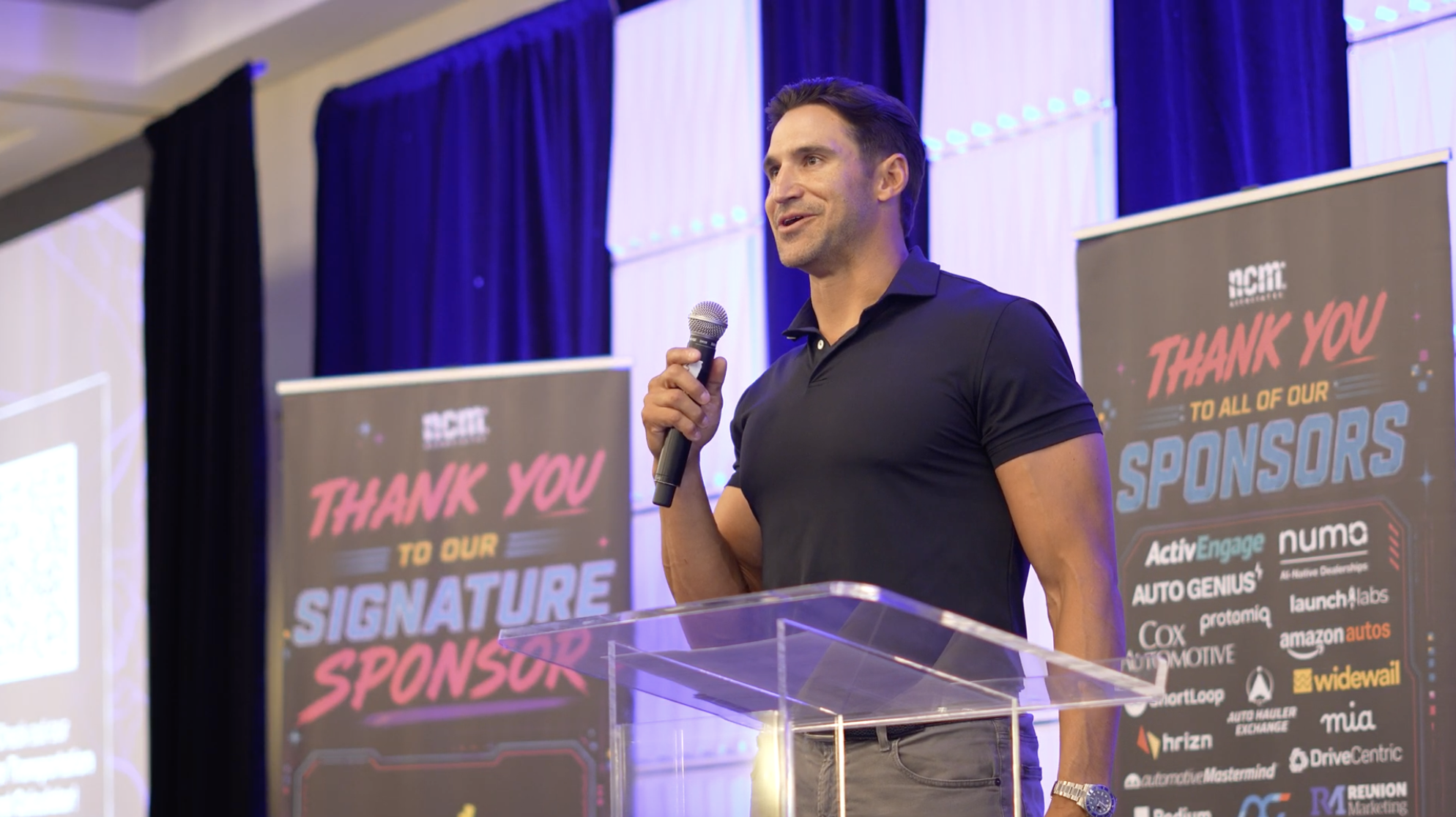
That stat came from Bryan Calloway, executive vice president of the National Digital Titling Clearinghouse (NDTC), in his “AI-Ready or AI-Risky?” session at Used Car Week, as reported in Car Dealership Guy’s recap of the show. His argument: dealers are in a change-or-die period, and the ones who don’t adapt risk becoming the Blockbuster of auto.
Most of the conversation around that shift focuses on digital retail, AI search, and the online buying experience. All of that matters. But a wider market also changes something more physical: how far your vehicles travel, and what every day of that trip costs you.
Distance Turns Time Into Money
Calloway put the holding cost on an unsold used vehicle at $50 to $85 a day. Holding cost generally runs well beyond interest, taking in depreciation and the opportunity cost of a unit that isn’t front-line ready.
Now consider how much of that time happens before a vehicle ever reaches your lot. A unit bought at auction 300 miles away waits for a carrier, rides on a truck, and sits through any delays along the way. Every one of those days is a day of holding cost on a car you can’t sell yet.
Your broker quotes you a price for the move. But by the time that vehicle is on your lot, the quote is only one part of what you actually paid. The rest is spread across your floor plan statement, auction invoices, and your managers’ calendars, which is why most dealers have never seen it in one place.
The Five Layers Between Your Quote and Your True Landed Cost
Take a common example: a $30,000 unit bought at auction, quoted at $850 to transport. Here’s what sits between that quote and what the vehicle actually costs you to land.
1. Broker margin (inside the quote). In the traditional broker model, roughly 25% of the transport invoice stays with the broker rather than going to the carrier who moves the car. On an $850 quote, that’s about $213. It isn’t added on top of your price. It’s already inside it.
2. Floor plan interest while in transit. If the unit is floor-planned, interest accrues every day it’s on a truck. The math is simple: purchase price × annual rate ÷ 365 × days in transit. At 7% APR over 8 days, a $30,000 vehicle costs about $46 in interest before it arrives. Cut transit to 4 days and that drops to about $23.
3. Auction storage. Auctions typically give a grace period of 3 to 7 days, then charge $25 to $50 a day. A slow pickup that runs three days past the grace period adds $75 or more.
4. Manager time. Someone at your store books every move, follows up on delays, and handles paperwork. With a broker, that’s roughly 20 minutes per vehicle. Working a load board directly, where you vet carriers and confirm insurance yourself, it’s closer to 50. At $60 an hour, that’s $20 to $50 per vehicle.
5. Arbitration risk. Some vehicles arrive damaged, late, or with a condition dispute. Industry benchmarks put that at about 2% of vehicles, at around $2,000 per incident. Spread across every unit you move, that’s about $40 of expected exposure per vehicle.
What It Adds Up To
That $850 quote becomes a true landed cost of about $1,031 per vehicle, with $181 sitting outside the transport invoice entirely.
- Transport invoice (includes ~$213 broker margin): $850
- Floor plan interest (8 days): $46
- Auction storage: $75
- Manager time (20 min): $20
- Arbitration risk: $40
- True landed cost: $1,031
One vehicle doesn’t make that gap feel urgent. Volume does. A dealer moving 40 vehicles a month carries about $7,240 a month in costs that never appear on the transport invoice, or roughly $86,900 a year. And that’s before counting the broker margin already inside every quote.
Note that the floor plan line counts interest only. If you think about holding cost the way Calloway does, at $50 to $85 a day, eight days in transit represents $400 to $680 per vehicle in broader carrying cost. The interest figure is the conservative version.
The Carvana Lesson Applies to Transport, Too
Calloway’s sharpest point wasn’t about Carvana’s vending machines. It was that his kids never had to repeat a step when they bought from Carvana. Once something was done, it was done. Nobody re-shared information, and the process never restarted because of a poor handoff.
He was clear that most buyers won’t want the Carvana experience. His advice was to learn from the process instead. One item on his checklist: make it so customers only have to share information once.
The same idea applies to how vehicles move. In a traditional transport chain, a load can pass from your store to a broker, from the broker to a load board, and from there to a carrier. Each handoff is a chance for details to get lost, for a load to be re-posted, or for a pickup to slip. That’s where transit days, storage fees, and manager follow-up time tend to pile up.
Auto Hauler Exchange connects dealers directly with 5,500+ vetted carriers, with an average delivery time of 4 days. Fewer handoffs means fewer chances for a move to stall, and pricing is transparent from the start.
Run the Numbers for Your Dealership
The example above uses common benchmarks. Your numbers will be different: your floor plan rate, your typical transit time, your volume, the auctions you buy from.
The AHX Dealer True Landed Cost Calculator walks through all five layers in six steps, using your own inputs. It’s free and takes no signup.
Calculate your true landed cost →
Once you’ve seen your number, you can request a shipper account to start booking carriers directly.